Showing posts with label Environmental concerns. Show all posts

Wednesday, 23 July 2025

“Turning a Calamity Into a Game”: Aid, Spectacle, and the Crisis of Public Service

“Turning a Calamity Into a Game”: 
Aid, Spectacle, and the Crisis of Public Service


In the aftermath of days of torrential rains and widespread flooding, the town of Calumpit in Bulacan, Philippines, was placed under a state of calamity. Families waded through waist-high waters. Homes were submerged. Livelihoods, once modest, were now washed out. 

And then came the post. 

On Wednesday, Calumpit Mayor Lem Faustino launched a flood-relief initiative on Facebook encouraging residents to upload photos of themselves — along with their families — inside their waterlogged homes. The reward? A chance to win digital cash aid through a raffle draw conducted live on social media. 

The backlash was immediate and scathing. 

The initiative, dubbed “E-Ayuda ni Mayor Lem,” was presented as a gesture of solidarity and family unity amid disaster. “Through this,” the post read in Filipino, “we show how Calumpiteños, by staying together as a family, can rise together from this calamity.” 

But critics saw something else entirely — a disturbing transformation of disaster relief into performance. A calamity turned into a contest. Public service recast as a public show. 

Digital Aid or Digital Spectacle? 

By the time the raffle was set to go live, the post had amassed over 20,000 reactions and 9,000 shares. But the sentiment in the comment section turned rapidly. Many questioned the ethics of asking flood victims to publicly post photos — including GCash numbers — on a public forum. 

“This is distasteful and also a privacy breach concern. GCash number? Really? On a public post/domain?” said one user. 

Another questioned the security risks: “Does the mayor not know that posting personal numbers in comment sections makes people prone to scams?” 

Others were more direct.
“Taxes, now raffled off like prizes.”
“More likes, more chances of winning, Madam Mayor?”
“People are soaked to the bone, and you’re asking for selfies?”

 For residents already stripped of their possessions and privacy by the floods, the requirement to perform their suffering publicly — for the slim chance of aid — struck many as cruel and degrading. 

A Game Show State of Emergency 

One comment captured the outrage succinctly:
“These are people trying to survive a catastrophe, not circus animals to be paraded for entertainment.”

 It is a striking indictment of how the line between governance and spectacle has blurred. In the age of digital virality, even state responses to natural disasters are now at risk of being gamified — prioritizing optics over dignity, engagement over empathy. 

Calumpit was under a state of calamity. The expectation was immediate, equitable relief — not a lottery. 

Damage Control, After the Fact 

Later that evening, Mayor Faustino appeared on Facebook Live to clarify. She insisted the e-ayuda was merely one part of the local government’s relief efforts, which included door-to-door aid distribution. She also walked back the raffle format, stating that all who posted photos during the specified hours would now receive aid. 

“This is just one method,” she explained. “Everyone who posted will get help through GCash.”

 But by then, the damage had been done — not only to public trust, but to the image of what public service should look like in a crisis. 

The justification offered — that photos would help verify who was most affected — rang hollow for many. Isn’t that what barangay assessments and local officials are for? Why was the burden of proof placed on already-displaced families, many of whom may not even have access to smartphones or stable internet? 

Relief Should Not Be a Performance 

This episode in Calumpit raises uncomfortable questions for any democratic society. If digital participation is becoming a requirement for state assistance, who gets left behind? And when disaster response is staged for likes and shares, where does the spectacle end and the real service begin? 

It is one thing for citizens to come together online to support each other. It is another thing entirely for a government to condition aid on a social media submission — no matter how well-meaning the intent. 

What happened in Calumpit is not just a communications misstep. It is a symptom of a deeper rot: a growing willingness to make dignity conditional, to treat human need as content, and to let relief hinge on visibility. 

When survival becomes a competition, governance has already failed. 

Calamity is not a contest.
Public service is not a performance.
And the people deserve better than to be asked to smile for help. 

Wednesday, 24 May 2023

For health, land, and livelihood: Prepare for El Niño!

For health, land, and livelihood: 
Prepare for El Niño!  


 According to a new World Meteorological Organization (WMO) update, the possibility of El Niño forming later this year is growing. This would have the opposite effect on weather and climate patterns as the long-running La Niña, and would certainly fuel higher global temperatures. 

 At the moment, neither El Niño nor La Niña are present in the tropical Pacific, which includes the Philippines. However, the update, which is based on input from WMO Global Producing Centres of Long-Range Forecasts and expert assessment, indicates that there is a 60% chance for a change from ENSO-neutral to El Niño during May to July 2023. This probability will rise to about 70% in June to August and 80% between July and September.  

It may persist until 2024 according to PAGASA.

From this update would say that the agricultural industry and the peasantry will undoubtedly bear the brunt of the harm that El Niño will cause. The agricultural losses during the previous period of extreme drought in the country totaled P400 billion. In this vein, the peasantry demands that the government take fast steps to offer a thorough plan to tackle this. It is essential to guarantee adequate assistance especially for local agriculture, small farmers, and farmworkers. 

However, while pleading with the government for prompt and sufficient aid, this also necessitates readiness as farmer groups and rural organizations should band together and mobilize in anticipation of this phenomenon. History has shown that assistance from a dysfunctional government is frequently tardy, meager, or worse, absent altogether. 

The need for unity in this situation may be dismissed as political, but it goes beyond in anticipating the upcoming drought to ensure food and water security as this affects local agriculture and everyone’s well-being. This includes immediate planning and execution of drought preparation measures. It is necessary to encourage farmer organizations, mutual-aid groups, and cooperatives to organize for their own benefit as communities must have adequate food caches such as rice, corn, root crops, and vegetables, for widespread starvation brought by the drought must be anticipated especially since more than half of the agricultural lands in the region are expected to be affected. 

Furthermore, people must also better coordinate their efforts in order to combat the prospect of a water shortage- and that includes planning and preparing for community irrigation systems and other practical measures to guarantee that livelihoods weather the impending phenomenon. 

Other than agriculture, El Niño also affects health as Changes in precipitation and temperature contribute to the effects of El Niño on human health such as diarrhea, skin diseases, poisoning, heat cramps, heat exhaustion, heat stroke, and respiratory diseases. This can also lead to increased incidence of outbreaks and diseases transmitted by mosquitoes.  Hence, people should stay hydrated, wear light and loose clothing, not doing strenuous physical activities, as well as seek medical attention in case of experiencing symptoms of disease.

Thursday, 13 April 2023

“A Letter to Churches, church leaders, and faithful”

 “A Letter to Churches, church leaders, and faithful”

by Bishop Antonio Nercua Ablon,
 Philippine Independent Church 


 Dear Brothers and Sisters in Christ,
 
As we celebrate the joyous occasion of Easter, let us take a moment to reflect on the world situation that we find ourselves in. It is no secret that we are faced with many challenges, including war, economic poverty, security concerns, and the protection of the environment. These issues are affecting people in every corner of the world and require urgent attention and action.

In times like these, it is important that we turn to our faith and draw strength and hope from the resurrection of our Lord Jesus Christ. It is through His sacrifice and triumph over death that we are reminded of the power of love, compassion, and selflessness. As Christians, we are called to emulate these virtues and be a light in the darkness.

The world is currently experiencing a number of conflicts and wars that have caused immeasurable suffering to innocent civilians. As followers of Christ, we must work towards peace and reconciliation, promoting dialogue and understanding between different nations and peoples. We must also advocate for the protection of human rights and the dignity of all people.

Economic poverty is another major issue that affects millions of people around the world. We must work towards creating a more just and equitable society, where everyone has access to the basic necessities of life. This includes promoting fair trade practices, providing education and job opportunities, and advocating for the rights of workers.

Security is also a major concern in many parts of the world. We must work towards creating a safer and more secure environment for all, promoting social justice and the rule of law. This includes addressing the root causes of violence, such as poverty and inequality, and investing in education and conflict resolution programs.

Finally, the protection of the environment is an issue that affects us all. As stewards of God's creation, we must work towards preserving and protecting the environment for future generations. This includes reducing our carbon footprint, promoting sustainable practices, and advocating for policies that protect our natural resources.

In closing, let us remember that as Christians, we have a responsibility to love and serve others. Let us pray for those who are suffering and for those who are working towards creating a better world. May the joy and hope of Easter inspire us to be agents of change and bring about a brighter future for all.

Yours in Christ,

 + Antonio

Thursday, 30 September 2021

"Protect the Pasig River! Oppose Ramon Ang's Pasig River Expressway (PAREx) Project!"

"Protect the Pasig River! Oppose Ramon Ang's
Pasig River Expressway (PAREx) Project!"


This note is in one with the concerned folk in strongly opposing Ramon Ang-San Miguel Corporation’s Pasig River Expressway (PAREx) Project. This ambitious project, composed of a bridgeway that will straddle the length of the Pasig River is the latest corporate-driven megaproject that poses a threat to Manila’s environment and cityscape. 

According to the Department of Public Works and Highways’ website, this profit-driven project, touted as a solution to Metro Manila's traffic and logistics woes, will have three major segments: Segment 1 from R-10 to Skyway 3 Plaza Azul, Manila; Segment 2 from Skyway 3 San Juan River to C-5, and Segment 3 from C-5 to C-6. PAREx will also connect to, and utilize a 2.7-km portion of the new Skyway Stage 3 from Nagtahan to Plaza Azul.

And along with other existing megaprojects brought by Ramon Ang will further reinforce the rising dominance of this big compradore bourgeois in large public infrastructure projects which promises San Miguel Corporation hundreds of billions of pesos in profit. Prior to PAREx, Ramon Ang has successfully cornered giant public infrastructure projects that promises a return of hundreds of billions of pesos in profit. He was granted government license to start the Aerotropolis Project to build and operate a new airport in Bulacan. Ang also owns and operates the NAIA Expressway, the Skyway Stage 3 and the Tarlac-Pangasinan-La Union Expressway.

However, this Malacañang-promoted ₱97-billion megaproject, as any other infrastructural feat being touted under the “Build Build Build” program will instead be treated as a pallative solution, to which critics have pointed out how this project will induce the use of more vehicles and exacerbate the perennial traffic in Metro Manila. Furthermore, this also transforms the city’s iconic river and main waterway into a dark underworld above which will loom yet another hellish landscape of asphalt and concrete. 

Expect apologists would still praise this project as a necessary solution to traffic and logistics woes amidst popular criticism. But many fear that this Project will also damage heritage sites and structures especially in Manila, and further pollute the Pasig River. And contrary to the statements brought by San Miguel, the project is also being criticized for the absence of transparency with the lack of studies to evaluate its impact on the public and the environment. Even Palafox and associates, whom San Miguel allegedly consulted for the project, expressed hesitantly about the environmental implications of the said expressway nor denies working with San Miguel for the proposed project. 

***

While this note supports initiatives based on sound science regarding the maintenance and cleanliness of the Pasig River, the fact that the current dredging operations such as those planned by the San Miguel Corporation, as rather just preppin stages for various concrete monstrosities “in the name of development”. This pretentious venture, initially using "environment" with its dredging programs over Pasig and other rivers like Tullahan, turns out an attempt to set foundations for the proposed megaprojects that rather aggravates problems ranging from noise pollution to that of “non-exhaust emissions” like microplastics from car tires, road dust, and particulate matter. Just find how absurd Ramon Ang justifying the project "can solve traffic and congestion, provide jobs for thousands of Filipinos, boost productivity, improve people’s daily commutes, address flooding, and save the Pasig River itself"- these that can also be resolved by improving the existing mass transport system. For sure one would wonder that the government who accepted this billion-peso road project also building modern train lines and even a subway, and this is what we must focus on instead, not highways! Trains, when reliable and connected to other networks, can move more people than any car.

But anyway, under today's neoliberal policy, public conveniences such as roads and bridges, have increasingly lost their public service orientation as these are put under the control of profit-driven big capitalists such as Ramon Ang and other big compradore bourgeois. They are given control over large tracts of public lands and public space to generate profit in the form of pay-for-access expressways and bridges, while public roads are without space to expand and left to deteriorate. People are compelled to pay for the “conveniences” even as they continue to pay taxes to a state that has abandoned all responsibility to provide them with such.

Tuesday, 17 March 2020

Social Distancing? Yes. Social Solidarity? The better!

Social Distancing? Yes.
 Social Solidarity? The better!

(Or: For the need to support the labouring folk in the time of Corona)


Background

Ever since the public report of COVID-19 in China last January 2020, the Duterte regime has downplayed it for more than two months and allowed Chinese travelers to enter the Philippines, mostly as tourists, gamers, and employees of offshore gaming services. 

By initially downplaying this matter, it shows how Duterte is totally unprepared to deal with this pandemic, from few scores as admitted by the Health Department, no systematic testing and counting have been made due to a budget cut on health services as well as lack of personnel and resources. With this problem, the virus has spread nationwide, with reports coming from various towns and provinces about fatalities due to the virus. 

At present, an "enhanced community quarantine"  is announced by President Duterte and in effect on the midnight of March 17. This "community quarantine", obviously a lockdown, is a means to control, or restrain people in pursuit of controlling the situation caused by this virus outbreak. However, instead of mobilising health personnel and resources "taken pride" by the government, the regime instead treating it as a "peace and order" situation, mobilising the armed forces and the police followed by threats of arrests according to the authorities.

But despite this mobilisation, there shows a lack of public health personnel and resources over wide areas, there is no testing for COVID-19 at the community level, and even lack of kits despite government promise to distribute kits coming from both abroad and from the University of the Philippines-National Institute of Health, whom produced abit minimal some kits for COVID-19. Meanwhile, local pharmaceutical companies like United Laboratories (UNILAB) and Pasucal Laboratories Inc. are silent on this matter, despite issuing information regarding the outbreak and its precautionary measures, making local health care services dependent on imported medicines from India while waiting for possible vaccines contra COVID-19.

And to think that despite these situations, would say that it is unsurprising that the regime itself bears utter contempt on this matter. True that there is a need for control with all the necessary precautions, but with failure to mention on the need to deploy health workers at the community level, of concentrating the deployment of both police and military personnel, coupled with fresh memories of operations "tokhang" and other infamous police actions,  and lack of a concrete measures regarding COVID-19, it is unsurprising that the regime may weaponise the pandemic in order to intimidate and coerce the people in his orderist tendency. 


The need for an immediate support

Thus, in line with the recent note this person made regarding the government's response to COVID-19 virus, the people demand a seven-point action to control this virus outbreak.

These set of demands, based from the views of the folk through the "seven health demands" and other pleas for emergency assistance, expressed the lack of immediate support from the government and its foolhardy responses, as well as stating a much needed and community-based alternative to situation gone aggravated by interest.  Here as follows:

1.) Calling for an immediate medical aid instead of mere military/police action to control the situation. Checkpoints should be accompanied with medical support other than ensuring peace and order from entering-leaving the vicinity. Makeshift treatment facilities are also included.

2.) Ensuring both public and private workers and employees their occupational safety and health especially in government agencies of outmost importance, Business Process Outsourcing, and establishments related to food and medicine production/distribution, banks and remittance centres, and utilities (water, electricity, telecommunications). Financial assistance and mandatory paid sick leaves to those who can't work due to the pandemic.

3.) A free, massive COVID-19 testing kits and services to be undertaken (from quarantine to treatment of patients affected by the virus).

4.) Rechannel government funds particularly from the president's confidential and intelligence fund to the health sector, and in extension, social services.

5.) Price control for basic needs (food, medicine, utilities), moratorium on lease rentals, reprieve on utility bills.

6.) Immediate repairs for lines affecting utilities especially water distribution services, a sufficient water and electric supply to ensure people's needs.

7.) Support for local scientists and health workers, and in extension, cooperation between state, academe, and industry out of national interest to resolve this virus outbreak.

Sunday, 15 March 2020

"Armed Lockdowns doesn't stop the Virus." (but popular participation against the Virus will do)

"'Armed' Lockdowns doesn't stop the Virus."
(but popular participation against the Virus will do)

(Or: Notes after President Duterte's announcement 
calling for a Lockdown to stop the spread of COVID-19, 
of mobilising armed instead of health personnel, 
and the need for people's support for just need to stop the virus)


At first, this note wishes to assure the Filipino folk that in this time of health related crisis everyone ensures well their health and well-bring. For as President Rodrigo Duterte announced recently that Metro Manila will be locked down from March 15 purportedly to stop the spread of the COVID-19. 
In this situation, around 12 million people will be barred from traveling to and from the metro, whether by land, air or sea; and furthermore, up to 3 million more workers from nearby provinces will have their movements restrained.

It is unsurprising, for given the president's orderist tendency would say that he doesn't mind how controversial the move is especially after mobiling his armed forces than those of health practitioners, thinking of it more of a "peace and order" than a "health-related" situation; what more that his supporters, with all their optimism towards the regime thinks of it too positively, using words like "rule of law" and all while disregarding its unlikely scenarios.
But on the other hand, through this massive deployment of both military and police may say that it aggravates the problem further, especially in the handling of people in this time of crisis. For in a regime known for its extrajudicial acts and how the president tolerated it as such, seeing armed personnel instead of health workers conducting the lockdown has the potential to "weaponise", worse, to pin down potential dissent especially those who assert a higher state budget for health and social services.

So much for orderism that the regime uses COVID-19 for an armed "lockdown". That by seeing armed vehicles, numerous checkpoints, and of course, men in uniform carrying scanners alongside guns would say that "they are doing their job" both in ensuring peace and order and by expressing a semblance of concern towards Filipino's health and welfare, but this doesn't stop the ridicule especially after by failing to make restitution for cuts in the health budget and its failure to undertake proactive and decisive action at the onset of this virus outbreak.
And to think that Duterte had altogether shrugged ideas of active deployment of health workers and of setting up adequate testing centers to provide accessible and immediate aid in areas affected and instead by deploying both the police and the armed forces, this "lockdown" becomes less of an health-related issue but more of "peace and order" with threats of arrests against those "who will not abide by their rules."

Again, not surprising to see it weaponised, for in line with this matter, the marching order and the massive deployment of both police and armed forces are itself reminiscent of Martial Law in Mindanao and under Marcos regime wherein cases of warrantless arrests and arbitrary detention being pervasive. And with people still having fresh memories of oplans "Tokhang", "Double Barrel" and "Kapanatagan", this may become "weaponised" and expanded further in order to silence potential dissent, specifically in curtailing people's right to protest and to demand immediate assistance to address the spread of COVID-19.

And in speaking of workers, Duterte has not presented concrete plans for Filipino workers in the metro who are gravely affected by this lockdown. For as millions of Filipinos in the metro been forced to return to their homes in the provinces thinking about their safety, others end forced to live with pressed-down incomes, enforced curfews with checkpoints, and under threat of COVID-19 infection. For officially, the Duterte regime claims 52 local cases with five deaths.

With this kind of situation, this "lockdown" hath lead the Metro into a state of pandemonium, if not an outright disaster- that with the president announced unprecedented measures peppered with meandering and contradicting statements, it has brought the people confused, scrambling, struggling to provide access for food, water, medical care, and others needed for this month of isolation. Worse, to see hoarders earlier hoarding medical goods such as medical-grade alcohol, soap, and other disenfectants to be sold in exorbitant prices.
And most government officials seem to have no clearer idea than the folk in general. Duterte's statement is quite confusing to most, with people failing to understand what "community quarantine" means- including health workers responsible for treating suspected COVID-19 patients.

Perhaps, in this time of self-care would say that contentment to the order's statements isn't enough, and no matter the threats given by the order this doesn't stop the concerned from continuously seeking truth from facts. And to think that Duterte failed to praise health practitioners for their work and instead praising Xi Jinping, this note, as any other concerned bid salutations to those who truly worked hard in ensuring the health and well-being of the Filipino folk, in fighting the odds brought by this virus, and to restore hope.

And in speaking of that hope, hope that the people, despite being "assured by the state" and prepared for this health-related matter, does not stop from seeking truth from facts and to expose, oppose the inconveniences the inutile and incompetent government does to the Folk- of countering false narratives with facts, of exposing the order using "rule of law" as basis for their stupidity, or how that the order uses this scenario as a prequel to a much unlikely one.
Also in line with this, this note calls on the Filipino folk to demand for adequate and accessible testing and health service centres, of mobilising health workers over those of state armed forces, cooperation between state, academe, and industry for national interest amidst the outbreak, and for greater state budget for health, social services, and science and technology altogether to contain this virus-laced onslaught.

Thursday, 15 March 2018

"Notes after Muñoz"

"Notes after Muñoz"

(Or "seeing inventions, meeting investors,
 and heeding their desire for a domestic-based development
through science and technology")


At first, this person is ought to say that if not for their efforts, the desire to modernise Philippine Agriculture using domestic-based science and technology will end in vain. 

For as he, in visiting the Bureau of Post-harvest Research and Extension in the Science City of Muñoz, Nueva Ecija, sought the chance of promoting and encouraging Filipinos to mechanise agriculture and to support local manufacturers, as well as inventors whose desire is to make Agriculture improve and Industrialisation be taken seriously as part of the government's development program.


Initially, the visit was a purely office matter, but with seeing prototypes displayed and of its inventors explaining, this person finds it interesting if not thinking that the visit itself was more than just work alone, nor even a leisure,  but of a desire to assert the need to take seriously the country's state of Science and Technology.

And with the pictures shown in this post, this person ought to say that there are chances of development if not for letting an economy be decontrolled no matter how the government afforded to make attention on their concepts, works, and discoveries.
For what this person realise is this: that it is too common to describe today's state of Science and Technology as a bunch of papers. Knowing that some, if not most of which were still in its conceptual stage, no matter how it was undergone editing or further elaboration just to get approved by its assessors; while other inventors were in dire need of support- especially those whose prototypes as being shown as well as tested by its creators.


And from there, this person, like others concerned, would say that if the government truly wanted to cultivate science and technology to improve the country, and at the same time seriously adheres in its neoliberal-globalist platform with its disdain for domestic based science and technology in favour of foreign-made ones, then what the heck are they talking about?


Anyway, the present order, although it tries to "make attention" on the country's state of science and technology is rather limited to just "giving crumbs" if not simply "moral support". Various bills been passed but few are taken seriously to address the matter, and numerous concepts such as "Filipinnovation" are marred by politics.

And other than the inventors themselves, other concerned ones includes groups who desired more than just promoting science and technology for the people with its inventions or discoveries meant to be promoted by the government for its "developmental goals". One of them is AGHAM, whom expressed concern regarding the country's state of S&T unlike those of its neighbours, as it said:

"Highly industrialized countries were able to develop technologies that benefit most of its population. Their products are enhanced by the latest scientific innovation. The ability to input technological innovation into the manufacturing sector and industry translates to the economic superiority of industrialized nations. It is therefore essential for the country to develop its science and technology." 


Truly indeed, knowing that from those countries they had to undergone industrialisation not just to improve agriculture or to utilise natural resources, but also to harness their knowledge skill so as not to depend on foreign imports and to save hard currency; and industrialists like Salvador Araneta wanted that way regardless of how multinationals oppose, if not threaten the Filipino's desire for one's own development.

But in spite all the bullshits that also affected the country's state of science and technology, what more of the economy in general, this person remains optimistic that the common man can convince that domestic-based development be seriously taken rather than depending on the policies of multi/-transnationals, in which making a country indebted, as well as to promote seriously the common good of future generations of Filipinos.
For knowing that despite today's administration's promises and "programs" to alleviate poverty and stimulate the economy, still, tens of millions of Filipinos continue to suffer crushing poverty while a handful of foreign investors and domestic oligarchs prosper. Sounds "usual" to hear this statement, if not to be described as radical by some, but with decades of obeisance to neoliberal globalisation policies, continuous exploitation of the country's natural resources and labour power remains a really concerning issue, therefore there will always be those who demand something better what more that they themselves can offer an alternative in which the existing order cannot provide with. With those inventions shown, one would say that the inventor's intentions are change-forming as it positively affects each and every sector such as those of the farmer who will gonna use and of the industrialist whom has to produce. 


But again, his visit there was all but work. Yet in seeing those and met the ones who afforded to create or discover, what more of their desire to change through science and technology lies something a country should or must not miss.

If not for the ones who actually hampers their growth, of restraining to take part in building a better future. 


Wednesday, 21 September 2016

A need to Rethink

 A need to Rethink

(or all after seeing an order
trying to bastardise people's aspirations
into theirs)


It seems that today's order of things has been less to do with realisation of supposed profound goals and more to do with retention of interests.

That all despite numerous promises and perhaps seeing initial successes, the alternative future, or the final goal in which all of the programs and efforts allocated has not been fully realised.
And in it encompasses political, economic, cultural, or any matter that affects the individual, the community, and even the generations whose aspirations be greatly affected by an inconvenient truth such as a decadent and corrupted society.

For as contrary to the views that are being presented such as those forecasted by "optimistically minded" futuristics, reality has rather brought to a still conclusion that behind all words such as reform, restructruring, change, or even revolution, is a same old status quo save for new Television shows, office and commercial buildings, and means to keep people "at bay", especially amidst "actually existing truths" such as crisis and scandals in its various forms.

Sorry to say but that inconvenient truths brought about by today's order of things rather negates change and restructing as it favours retention of interests. The system tries its "best" to maintain as possible as they afforded to use words such as change and reinterpret their so-called "charity" as "empowerment". Good to hear their so-called "intentions" though, but the obvious mismanagement that created numerous crisis made one think how come amidst developments same old problems remain full scale what more of its effects as shown by its numerous protests and various forms of direct action?

Anyway, both the elite as well as the masses shared the same perspective and view about an empowered and developed society such as what the late Ferdinand Marcos said:

"Political liberation, economic emancipation, and social concord- these are the basic aspirations of the Filipino community. They are goals as well as guiding principles, aims as well as methods, in our efforts to transform Philippine society."

Sorry to use him for a reference, but the desire for restructuring Philippine society by revolutionary means comes a realisation of sorts be it peace, land, and bread; but a sorry state of reality brought about by an interest seeking order makes one think what kind of change has affected millions of people especially those who truly desired that damned word? For sure they have sought a fast changing setting such as skyscrapers and state of the art gadgets urban-bred populaces can afford, but archaic truths such as corruption within in the bureaucracy and various forms of social injustices in the countryside makes a third world country rather stagnant in terms of social development.

That perhaps also benefited the developed countries given the third world's vassal-like state. To the system and its apologetics who afforded to babble freedom sees being a vassal if not a tributary to a greater power is more of an ally to trust with, that being dependent to a greater power meant chances of developent with alibis such as globalisation and neoliberalism that can provide "greater opportunities" particularly both in the economy and the society; and low wages and maldeveloped conditions for workers meant greater income for businesses that perhaps according to them also meant chances of empowering if not developing communities.

Anyway, with all these statements trying to justify a corrupted status quo of sorts, one may ask if 'are they serious enough in stating such profound words? Or just sneering people through the ears as if they are trying to appear willing to create what they have babbled about'? The words of the late dictator did babble about economic emancipation or political liberation, yet reality rather showed its contrary such as actually-existing repression guised as "rule of law and order" by corrupt bureaucrats, thuggish military and policemen, and status-quo favouring personages ironically babbling about change just to appease people's angst.
Time and again despite all their statements and at the same time seeing same old crisis and scandals makes their messages meant to appease a growing hatred by the people themselves, who, despite seeing the wonders the system afforded to brag still felt the hunger, thirst, hopelessness brought about by an order who despite sworn to fulfill aspirations rather focusing entirely in keeping its own interests.

And thus, no wonder why this person and others concerned would say that there is a need to rethink in this continuing past rather than just move on without putting justice and realise such profound yet confusing words such as change.

Tuesday, 19 April 2016

"There are no oil containers at Pandacan anymore."

"There are no oil containers at Pandacan anymore."


Source: Inquirer.net

It's been months passed since people seen this place beside the Pasig River. 

Be it via PUP Sta. Mesa or at the Mabini Bridge in Nagtahan, that place consists of steel containerts had been part of everyone's lives, be it the "car buffs" whose petrol coming from "Big Three" oil companies been stored prior to distribution in every branch, or the mediapeople given that the place as a center of attention when it comes to increasing oil prices that triggered protests after showing it in newspaper or in television. 

And that place was known as the "Pandacan oil Depot", one of the few once-industrial districts of then growing City of Manila.

Source: Wilberchie's world
According to Wikipedia, the Oil Depot started when Royal Dutch Shell established facilities in 1914, followed by Caltex that began using the Pandacan warehouse depot in 1917 as it started marketing its products in the Philippines, however its warehouse depot was converted into a key distribution terminal to bring products to nearby provinces eleven years later. While Petron, originally known as Esso Mobil, started operations in 1922.

The depot, like other strategic areas of the capital, had also suffered from destruction if not being a subject of various concerns. World War 2 for example, it was bombed by Japanese (in 1942) and Allied planes given its importance such as storing petrol for the armed forces. But after being rebuilt few years after the war, operation increased with oil companies trying to accommodate post-war demands. 

However, having a continued operation of the oil depot in suddenly densely populated major city has been a subject of various issues, especially those of its environmental and health impact to residents from its adjacent community surrounding the compound, as well as to the larger Manila population. The Malacañang Palace, the official residence of the President of the Philippines, is only two kilometers away from the depot. While the Polytechnic University of the Philippines, the largest university in the Philippines in terms of student population (approx. 40,000), is located directly across from the depots on the banks of the Pasig River.

And last 2005, the UP College of Medicine at the University of the Philippines Manila conducted the cross-sectional study which found that the number of cases of neuro-physical disorders in the area surrounding the depot have been progressively increasing. In that same year, a health survey proved that the air surrounding the oil depot contains high levels of benzene, a chemical compound known to increase risks of cancer.

Source: Inquirer.net 
Source: Interaksyon
There were also incidents surrounding the depot and its pipelines that somehow justified its removal. In 1997, two Shell oil tankers exploded inside the oil depot complex. And in 1999, a pipeline leak was the source of fires in Muntinlupa City, killing one.  In January 2008, a tanker burst into flames at the foot of the Nagtahan fly-over.  In July 2010, the leak of the underground pipeline of the First Philippine Industrial Corporation (FPIC), which carries oil from the oil refineries in the province of Batangas to Pandacan, caused the contamination of water bed table at the basement of West Tower Condominium in Bangkal in Makati City. And in 2013, the Laguna Lake Development Authority (LLDA) General Manager Nereus Acosta fined the operator of the depot with P200,000 daily due to environmental violations in the Pasig River, which runs from Manila Bay towards Laguna Lake.

The depot was also subject from terrorist attacks in recent years, the place itself, situated right in the middle of the city where residents have built houses even beside the perimeter fence of the oil depot be more prone to a disastrous explosion. It also figured that an oil depot explosion could result in a two-kilometer radius of devastation that would reach up to Malacañang Palace according to a 2001 report by Aidan Tasker-Lynch, an Irish expatriate and an expert on disaster management, who conducted a study on the effects of petrochemical industries on the population.

Source: Manila Bulletin
But regardless of the incidents and threats surrounding the area, as well as earlier statements from concerned groups calling for its removal, operations continued still with the "Big 3" trying to meet demands from its consumers. The depot was 100 years prior to its final decision from the courts leading to its closure and dismantlement of these iconic containers. 

Prior to that, there were attempts by the City government over keeping the deport at Pandacan or moving altogether even outside Manila. In 2001, the Manila City Council passed Ordinance No. 8027 that changed the classification of Pandacan from an industrial to a commercial district, as well as gave the oil depot six months to cease operating in the area. In 2006, Ordinance No. 8119 ordered the phasing out of hazardous industries in the city, including the depot. In 2009, Ordinance 8027 was upheld by the Supreme Court while the City Council passed Ordinance No. 8187 to negate the first ordinance. This time, Pandacan was reverted to its earlier classification as a heavy industrial zone, allowing the depot to operate. In 2012, Ordinance No. 8283 again re-classified the area as a high-intensity commercial zone, thus giving the oil depot until 2016 to relocate, but was vetoed by then Mayor Alfredo Lim. The proposal instead is to transfer the facilities to the North Harbor, which is still in Manila.
And in March 2015, the Supreme Court finally dismissed the motions filed by oil giants Shell and Caltex as it declared that its decision ordering the transfer of the Pandacan oil depot as final. With a vote of 10-2, the high court declared unconstitutional Manila ordinance 8187 that allowed the oil storage facilities to remain in the city. The high court also ordered Manila Mayor Joseph Estrada to cease and desist from enforcing Ordinance No. 8187 and coordinate with appropriate government agencies in overseeing the relocation and transfer of the oil terminals out of Pandacan. The high court also echoed its decision in affirming Manila Ordinance 8027 where it cited that the continued stay of the oil depots placed the residents of Manila in danger of being a terrorist target. Hence, ordinance 8027, approved in 2001, pushes for the removal of the depot in Manila.

source: MetroCebu
Given that International standards allow oil depots to operate within a 20-kilometer radius buffer zone, away from residential and commercial establishments. The removal of the depot from a densely-populated area be deemed "just" plus the decisions made by the Supreme Court over the ordinance made by the Manila City government.

However, on the other hand, the 101-year old depot be also considered as a heritage site as any other historical site in Manila. To an industry enthusiast, the place itself, like the Stripped Clasical Magnolia in Echague or the Futuristic Flour silos of Pasig, these steel containers is part of a century wherein Manila been developed into a modern urban metropolis. True that there are dangers that justified the depot's closure and its moving, what more of its dismantlement of those iconic structures;


But to think that there are no containers left at Pandacan, this person thinks why not even a single container, be it an empty oil tank or a container storing water, to serve as a reminder of what the compound once was? 

Sources:
https://en.wikipedia.org/wiki/Pandacan_oil_depot
http://newsinfo.inquirer.net/677988/farewell-pandacan-oil-depot
http://www.mb.com.ph/editorial-a-hundred-years-of-pandacans-oil-depot/

Wednesday, 3 February 2016

"How is the Zoo going?"

"How is the Zoo going?"

(or notes after Manila Zoo)

by Charlene Bernabe


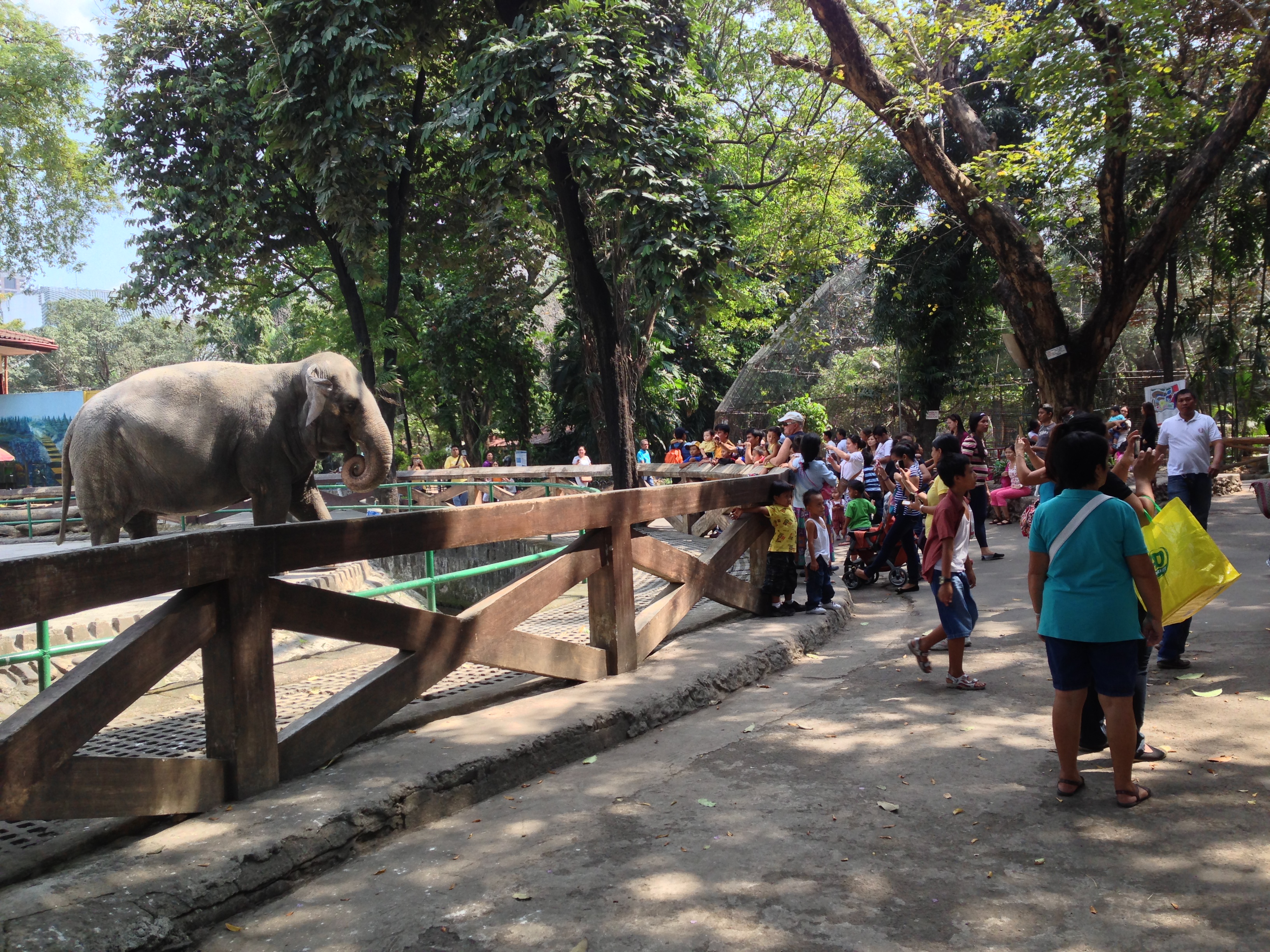
Mali the Elephant at Manila Zoo
(source: GMA News)


Since its establishment in 1959 in the former Harrison Square in Malate district, the Manila Zoological and Botanical Garden, known by many as the "Manila Zoo", has brought memories to those who had visited there, especially children who had fondness for seeing various animals.

And since April 2015, the 5.5-hectare (14-acre) zoo has been home to about a thousand animals from 90 species coming from both Philippines and Abroad. Animals like the Asian Elephant, African Giraffe, Bengal Tiger, Monitor Lizard, Hippopotamus, and others, that has made people from all walks of life see how these creatures has made that said place well-known for generations, especially those of Children during their field trips if not family respites during weekends. It is also home to many plant collections, from the botanically rich and diverse Philippines and other countries within the South Pacific region.


A sorry state for the area and its inhabitants

However, despite being visited by many, the Zoo has been criticised due to its inadequate animal care and surroundings deemed unsanitary for the viewer and the animal itself. And despite operating in accordance to the Animal Welfare Act of 1998, the zoo has been a subject of public scrutiny in regard to their animal welfare standards especially from its "Wildlife Rescue Center" that serves as repository and shelter for its confiscated, sick, or injured wildlife species. Several concerned groups like the "People for the Ethical Treatment of Animals" (PETA) has called for the closure of the zoo after pointing out numerous issues, besides its global campaign claiming how zoos aren't beneficial to animals given its repressive condition.

One issue being tackled by PETA is the state of Mali, the aged captive elephant in that said zoo as well as in the Philippines. According to the group, Mali spends her days pacing the same concrete area after being transferred from Sri Lanka to the Manila Zoo in 1977. It's sorry state includes isolation and captivity-induced foot problems, and according to World-renowned animal conservation expert Dr. Jane Goodall, she also learned that Mali "has not even had basic blood work conducted in the three and a half decades that she's been at the zoo."


A just rehabilitation? Or Selling it altogether in the name of commercialisation?

Few years ago, a total of 1.5 billion pesos will be allocated for the rehabilitation of the zoo, and be implemented through a public-private partnership with a Singaporean firm. But rumors about its "rehabilitation" includes an alleged sale to private interests especially those yearning for a commercial complex, that affects not just the state of animals but also hundreds of 60-70 year old trees, that somehow showed how that said area also served as a "green lung" in an highly urbanised metropolis be threatened by those whose usually disregarded effect includes increased urban heat, noise, pollution and even loss of sense of place.

Perhaps the concerned, driven by nostalgia and a desire for the coming generation to enjoy nature within the city, expressed that even if it is considered one of the world's dirtiest zoos, Manila Zoo is undoubtedly one of the few remaining spacious green spaces in the City of Manila coming from the original "Harrison Square". It's just cool looking at those trees, especially those stood for 60 to 70 years, yet still standing amid all these mess within the degenerating metropolis.


***

Charlene Bernabe is a student major in "Broadcasting" at the University of the East. This work is supposed to be for academic purpose as part of a groupwork.

Sources:
http://www.mirror.co.uk/news/weird-news/mali-the-elephant-has-been-in-solitary-for-35-1154237
http://www.petaasiapacific.com/feature-free-mali.asp
http://kickerdaily.com/manila-zoo-soon-to-be-world-class-after-rehabilitation/

Saturday, 19 December 2015

After Nonoy's wrath: A possible political circus through "relief goods", While the Samareño is still calling for help

After Nonoy's wrath:
A possible political circus through "relief goods",
While the Samareño is still calling for help


People scavenge for something useful amidst the rain
Source: ABS-CBN News

For sure one would expect that after the tragic events lies a political circus supported by interests yearning to take over anything especially in the affected areas of Northern Samar.

Like Yolanda that had swept Tacloban and other parts of Eastern Visayas past years ago, Nonoy, or its revised name, Nona, has swept some villages like Laoang, Catarman, Allen, as well as others even those of Catubig and Las Navas. Rain, Flood and strong wind turned wooden houses to shattered sticks, if not concrete houses mudslided, enough to make ruin in this season supposed to be preparing for Christmas.

However, this writer as well as others knows that there's a politically laced expectation going on especially in those affected villages and towns. The system, like last year has "made efforts" in helping, but does not appease the hearts of everyone knowing that they are trying to curry for votes especially this next year's elections. And worse, The people and their communities are not just devastated from the storm but from the received spoiled goods from the Social Welfare Department. The rice that was distributed by DSWD has a foul smell and the noodle packs were already expired.

Again, no wonder why people expressed disgust in the system's mockery of relief through spoiled goods if not failure for immediate support for the people, including concerned local officials that perhaps happened to be from the opposition. That somehow one would make them say that they are freaking mad with all these incompetence of certain officials like Dinky Soliman, and why President Aquino still keeps her on his sleeves despite its inaction and mockery of relief through spoiled goods; or even why the system remains reluctant in efforts to make Eastern Visayas recover its environment after years of being exploited by logging interests and hordes of pseudo-development. Remember: some mountains are having kess trees due to deforestation, enough for a cause of floods during the rainy season. Lack of mangroves created less protection from sudden waves of the sea what more of a storm surge in case of Yolanda years ago. Again, the system showed its incompetence, reluctance, or even stupidity in resolving the existing problem to lessen the crisis, if not using the crisis itself as a means for mudslinging if not half-baked promises this coming elections.

But on the other hand, this person knows that through communal unity, the people themselves can able to recover their lost homes and renew their lives. Given the situation would say that they are making much effort to clean and bring back their communities as possible, of providing food what comes from theirs knowing that the system may likely to fail in providing what is immediate. Groups like "People Surge" and other mass organisations has making fund drives and relief efforts to support these affected communities ravaged by the storm, both by yesteryear's Yolanda and today's Nonoy. After all, Reality knows that typhoons pass through the Philippines and not just earthquakes and volcanic eruptions making the country part of the "Ring of Fire".

And perhaps, it is a duty for everyone, unaffected or not, to prepare and help to recover from this catastrophe. Well, on the first place, this person loves some of his friends, not just his relatives who happened to be there, and of course, lies the concern about them. Not just because they are there but the yearness of being with them in this Yuletide season. 

Monday, 3 November 2014

A surge of Protest as justifed: still neglected for a year after Yolanda

A surge of Protest as justified:
Still neglected for a year after Yolanda

(A writeup made for the first year of remembering the tragic event)


It is been a year after Typhoon Yolanda had swept Eastern Visayas and other parts of Panay island and Mindanao. That, with its sudden deluge known as storm surge, had left 18000 killed while hundreds of thousands were left homeless and bereft of livelihood. There people, especially the masses had to rely on relief from both private and local government, domestic and foreign sources while trying to reconstruct their lives especially in urban areas like Tacloban.

However, in spite of their so-called relief, reconstruction, and rehabilitation efforts especially from the present Aquino administration, it rather end mismanaged as it fails to provide immediate relief to its constituents as well as failing to meet standards the structures meant to house those whose houses been swept by the deluge last November 8; it may also sound factual that the biggest chunk of the money meant for reconstruction and rehabilitation efforts had been carried away by thieves in uniform, citing the fact that the system itself, no matter it tries to act righteous, remains corrupt.

Until today, people in Eastern Visayas are difficultly trying to rehabilitate themselves and their communities as most of them suffer from hunger, poverty, illness, and even death as the system fails to provide services other than relief like adequate housing, livelihood, and education. Worse, the system, through its Social Welfare Department can't even give straight the donations as warehouses are still filled with the donations left rotting. And although Secretary Dinky Soliman had afforded to take pride that 90% of the 1,121 billion peso donation been allocated to the said efforts, then how come the vast majority still suffering? They even deny the underpaid Government Employees situated in those disastered areas emergency allowances to reconstruct themselves as well, how ironic then if that's the case.

Again, the system, no matter how it tries to act righteous as what Aquino said, remains corrupt. With the most of 1,121 billion peso donation under the hands of the corrupt rather than spent for arduous efforts, much more that the system had favored letting compadores like Gokongwei, Ayala, Aboitiz, Manny Pangilinan, and Lucio Tan take over anything in the name of "reconstruction" and "development".
Such terms, exploited by the compradores actually meant exploitation and profiteering at the expense of those whom actually lived in those communities. It may sound nice to hear these prominent people "lending a hand" to the less fortunate, but come to think of this: some of them are evading taxes like those of Lucio Tan, much more that the concept of development in areas the system designated as "no-build" zones are actually stressing commercialization in the name of theirs as compradores by nature, and international neoliberal interest in which they're observing with.
And besides that, the injustice left by those whom had done illegal logging has not been resolved. So what kind of development these people on high speaking after they cut down trees, turn ricefields, and communities into commercial complexes? Will they wait for another storm surge to come and teach these people who composed this rotten order a lesson? Much more from the still grieving people clamoring for justice like ghosts?

No offense, but true as the victims felt the hunger, pain, as well as fear after being neglected by the system. The "service" presented by the system is nothing but a rhetoric to peddle stating that they are speeding efforts amidst controversies such as pork barrel. Aquino, et al. may deny these allegations surrounding their actions before, during, and after Yolanda; while on the other hand, blaming them for disturbing their actions, much more that they blame the organisers for urging these less fortunate to turn their plight into hatred against the status quo.
That actually, it seemed right for the victim to turn their plight into hatred after letting the situation be mismanaged by those babbling public service if not letting profiteers do the job of "development" and "reconstruction." The two quoted terms, supposedly for the well-being of the people, are mere rhetoric as their press releases, much more that the system, in its disgust towards the dispossessed, thinks that, paraprhasing John 7:49 :

"They are unlawful, so they are under god's curse..."
And if so, then those who had afford to organise, no matter how subversive in the eyes of the present order, are the ones who respected these victims of last year's calamity. Not because they are ravaged by the storm surge, nor being hungry, sick, or homeless, but of being neglected by those whom babbling terms yet can't give wholeheartedly the needs people had called for.

Again, the system reiterated their statements as they tried to lessen the temper of the mass, But the more they deny their thieveries, neglect the dispossessed, mismanage the efforts to uplift the ravaged, the more they felt the tremors of protest from the cursed, a spectre that haunts their consciences.


Tuesday, 19 August 2014

"After seeing this"

"After seeing this"

(Or after reading news regarding an accident,
 and the people's clamor for safety, efficiency, and affordability
In mass transport system in the Philippines)


Its been days ago when this writer read about a report about an accident that contributes to the growing clamor regarding the state of the Philippine mass transport system. The accident isn't just a mere glitch that can be stopped and its passengers be promptly evacuated, but instead an accident that brought many of its passengers wounded.

As according to news, dozens were injured on that Wednesday afternoon after a defective coach of the Metro Rail Transit (MRT) went out of control and slammed through a steel barricade of the Taft Avenue Station in Pasay City. 50 were wounded and one of them is an infant that requires immediate attention same as the other wounded ones in hospitals such as Pasay's own San Juan de Dios. 

The accident seemed to be one of the few, yet serious problems surrounding mass transport like train-related accidents, and even accident-prone overspeeding buses in Manila (especially from ordinary buses).

But other than accidents such as the latest, there are glitches caused by defective trains, faulty wirings, and inefficiences surrounding the handling of passengers in Philippine mass transport systems that made its concerned customers question the authorities on how they handle the situation if not improve the status of mass transport. And with the problems involving the national budget being discussed and overheard by the people, the issue on mass transport is somehow connected on how the state allocates its budget in the Transportation and Communications Dempartment, and in it be allocated in specific authorities such as the Light Rail Transit Authority (LRTA), Metro Rail (MRT), as well as the Philippine National Railways (PNR) in improving every station, buying new trains, fixing wiring and electric generators, anything that ensures safety of its passengers and efficiency when it comes to the train's passage "on time". 

However, speaking of the national budget and the state's handling over mass transport would say that most officials are still clinging to their self-gratification no matter how small or big time it is, much more that the state itself, trying to downsize its expenditures in maintaining transport and communications, continues to toying with privatising the entire mass transport system in which potential buyers, mainly oligarchs controlling the power and real estate sector willing to grab a chunk just like in water, power, and in maintaining public roads. Metro Rail Transit, the company behind that goddamn MRT is even controlled as a partnership between private and government with the former undertaking its maintainance and the latter with its budget used for maintaining. 
But with the MRT accident as well as other glitches involving mass transport it would been a clamor from the other side such as privatizing altogether mass transport for it means efficiency and less corruption as they think about the present state. But actually, it's been so long that the authorities have half-hearted idea involving the improvement of mass transport except buying second hand junk and mere repairing, making patches rather than improving altogether as most countries do in regards to mass transport systems. That they continue toying the idea of privatizing mass transport altogether through commercialization and public-private partnerships such as in MRT; while on the other hand they wanted to imitate neighbouring countries such as Singapore, Malaysia, or even Europe and their favorite United States, yet failing to stimulate production through industrialization and instead contening in imports that also meant consumption. 
For sure, some, if not most people remember how the president stated that traffic caused by a greater number of cars serves as its basis for a thriving economy (and this time includes congested ports). Then therefore, why a need for a mass transport especially railroads both in the city and in the countryside? There are buses and trucks to serve better than these coaches on tracks! That's what  the president and his clique thinks of just like his predecessors treat trains as a mere showcase, a museumified piece for tourists to ride on while leaving the rest to buses and trucks as the primary mode of transporting people and goods regardless of increasing fares. 

And as people continue to question the authorities' failure to address the issue, if not handing over a series of press releases, others seemed crying for privatising altogether mass transport using accidents, inefficiencies, and corruption as its reason. The commercialization of state-controlled mass transport system, as well as partnerships with the profit-driven private sector had served as 'stepping stones' to eventual privatisation no matter how unintentional as it appears; but as the corrupt state continues to toy the idea on behalf of the oligarchs would say that they fail to provide services the way they privatise healthcare and commercialise education. After all, from whose class represents the state anyway?
Obviously, for a landlord-and-compradore-controlled state, the Philippines fails to develop for the mindset being imposed by the system is all but to consume than to produce especially if that is for the well being of the society (while at the same time compradores love to profit in seeing people consuming imports rather than producing what comes from theirs). In a nation whose central capital territory is as full of modern day buildings yet fail to stimulate production by means of creating major industries, this writer find it strange why people wanted anything modern and yet they fail to pressure the system to industrialize regardless of having awash with cash thanks to foreign investments and loans from international moneylenders? The Philippines had faced controversies involving state and budget from Pork Barrel to today's Disbursement Acceleration Plan in which the system affords to brag it off no matter how corrupt the recipient is. They even want to privatise mass transport citing the private sector's 'efficiency' in handling "basic social services", from "public-private partnerships" to eventual buying of government stocks; but no matter how the good intention the profit driven sector yearning for, it is simply because they want to cripple mass transport in favor of just buses and a dozen number of cars imported from the west the way it happened post-war when the old tramway system not being rehabilitated but instead be contented in buses and other 4-wheeled transport. And culturally speaking, Cars aren't really a mode of transportation in a pride seeking, consume-driven society, but instead a mere source of pride to brag with.

And all after seeing glitches, inefficiencies, and an accident that brought passengers wounded, again, it shows how the system fails in providing services while willing to give altogether to those whose intention is just-profit. The mass transport system is somehow profitable based from the growing number of customers using the MRT, LRT, or even the PNR; but the state seemed to be half-hearted when it comes to maintaining it the way it took years for the PNR, known as PhilTrack to have new trains, and rehabilitate new tracks, yet fail to improve further. 

Worse, failure to provide a sound alternative to the rising fares like jeeps and buses. People wanted safe, and efficient trips, but does it mean being safe and efficient has to be expensive? Then the state has to provide safe, efficient, and affordable the way other countries did in its mass transport systems. They would take crisis as reference in justifying increasing fares, but come to think of this, in a nation awash with cash, and a government that takes pride in its so-called progress, why not support its mass transport as well as others such as health care and education rather than leaving it altogether to the profit-driven few? 


Anyways, having mass transport-related glitches, accidents as well as inefficiencies also happened in developed countries like Singapore. However, compared to the former that emphasise mere profit over safety and efficiency, the latter is at least lessened its problem in its mass transport system knowing that the safety of their Mass Rapid Transit was even questioned by the public after several accidents on the system during the late 1980s and early 1990s. Most of the problems have been addressed by the government, and many safety measures are visible to users of the system.

And come to think of this, Singapore is a progressive, communitarian-oriented country, yet despite having their standards of living better than other Asian countries, they emphasise mass transport systems than seeing more cars in every road. Perhaps because Singapore is an urbanised isle to maintain with; and having limited space, such as an isle to support a thriving society requires strict policies, regulations, forces that makes a community great as compared to those whose trying hard rugged individualism that creates insignificant results. Mass transport systems, whether it is wheeled or railed has to be supported by the community especially through its own government knowing that most people can't even afford a car for themselves yet seeking a transport that ables them to go to their work on time, much more that there are people whom rather not to waste gasoline in their vehicles but at the same time seeking for transport that is worth affordable in its fares. 

That somehow should be a lesson for the authorities whom controlling mass transport, be it from the Metro Rail (MRT), LRT, and the PhilTrack (PNR), as well as the owners of buses that dominate major roads such as EDSA. This writer had been riding in public transport despite rising costs of fuel that affects fares, as well as watching reports involving inefficiency when it comes to safety and affordability of mass transport systems whether it is a bus or rail, and through those events somehow made it a duty to question, as well as to insist additional safety, increase affordability, and efficiency involving mass transport especially in a developing society like this so-called Philippines.


Saturday, 11 August 2012

Observing the people blaming disposessed, of uncontrolled development, and ...floods.

Observing the people blaming disposessed,
of uncontrolled development,
and ...floods.


Concerning the hypocrisies of the "feeling good" by Katleah Ulrike


It was yesterday when a picture concerning poor people complaining about government not noticing abour garbage and shantytowns as the primary cause of floods making them liable became viral and a cause of numerous negative comments on social media like Facebook.

Describing the picture, as this writer would say as more of a sheer nonsense that yes, people complain government due to massive unemployment, increase in prices of commodities and oil, rampant corruption in the bureaucracy, peasant problem and education issues such as tuition increases, in fact what is the connection of people complaining to garbage strewn rivers, roads, it makes some would think is the urban poor to be blamed simply because they are the scum of the earth?

An absolute sheer nonsense indeed.

As comments from facebook continues to malign the poor for living in shantytowns and creating garbage that causes floods, people seeming not thinking how their culture, such as a consumerist one and tying themselves into a cycle of work, earn, buy and consume created waste that most tend to throw in a corner and presenting themselves as clean.

Quite strange and stupid to read their comments such as blaming the disposessed for ruining the environment, of garbage, filth and other stuff simoly because of living in an eyesore such as a shantytown. But in this fast-becoming norm of contemporary days, all made out of spontaneous development in the urban areas such as Metro Manila affects culture to the extent of describing a contemporary Filipino as negligent and unclean as well as reactive when it comes to a crisis such as continuous flood and rain.

Speaking of tremendous rains that caused flood, according to Raymond Palatino, in his blog:

"Strong typhoons and other natural calamities will continue to wreak havoc in the country. Situated inside the Pacific Ring of Fire, the Philippines is constantly plagued by typhoons, earthquakes and volcanic eruptions. It is not financially feasible for the government to spend hundreds of millions of dollars every time a disaster hits the country. Instead, the government should focus its efforts in aiming to minimize the disastrous effect of natural calamities. The long term goal should be to reduce the number of lost lives and properties in disaster-prone areas."

Even to think that Metro Manila and its surrounding provinces, one of the flood prone areas in the Philippines were once swamps, that they are lowlands, hence likely to be flooded and not just garbage strewn in rivers, sewers, and other waterforms. The waste may have contributed to worsening serious matter, but come to think that other than efficient waste management and a disciplined populace, why not accepting the fact that they are living in a country situated in a ring of fire and hence need measures such as improving existing infrastructure, deepening of rivers, waterforms and controlled development?

As for garbage, Spanky Enriquez, in his Facebook account stated about:

"there are mountains of garbage all over the city; no garbage collection
since Thursday in the Sta. Cruz district..."


Then most dare to complain about the poor yet there were less efficient waste management that made some dare to throw garbage in waterforms and streets? This writer even sought collection points as entirely "uncovered" that people pass off as Eyesore.
But come to think of it, before the tragic events the urban poor tend to collect those waste and waited for dump trucks to come, but how come those people in trucks gone choosy? Obviously these waste end up in floods that made Enriquez complain about it.

Quite strange isn't it? And since people constantly blaming the poor for the flood, and perhaps the garbage, or even rain itself, brings this writer to the idea according to Gerry Lanuza:

"After Habagat, the state will sequester the “wasted humans” -- the excess, the superfluous and redundant who are not allowed to stay. While we move to separate and exclude this waste from mainstream society, we must devise new methods for its disposal as the lack available relocation sites means that the old method of dumping is no longer viable. Instead we must ensure that the waste is ‘sealed off in tightly closed containers’. The “wasted humans” become the scapegoat for individual insecurities and offers an ‘easy target for unloading our anxieties prompted by the widespread fears of another disaster!"

And even this:

"People cannot blame the torrential rains for the flooding because it's natural. So they turn to scapegoats like the informal settlers, squatters, and indiscriminate garbage disposal. Little do they realize that making these people choose the right options is not that easy: why would they evacuate if their houses will be looted? Why would they leave the creeks if they have no alternative shelter? Why impose "rational" choices on these people when we know very well they're already rational? But necessity overrules their rationality! They don't have the luxury to choose between rationality and survival. Survival is necessity when you are economically marginalized! But that's irrational."

Lanuza seriously made a good response to those hecklers and their comments, that the ones who are entirely victimized are rational that they prefer living in the city since the latter had economic opportunities than contenting in a countryside bereft of development. Most of them had engaged in underground economy, living as semi-proletarians such as drivers, carwashboys, that they sought prices in the city "better" than the increased ones in their once "living space", of their children studying in Metro Manila's public schools, any other reasons these people made them prefer living in the city, right or wrong despite numerous attempts to be evicted and even assailed as criminals and the like, of ruining images yet these people assailing had no solutions in creating real, comprehensive urban development program other than evicting them and living in danger zones or arable areas (and end up complaining about rice shortage).

That made Lanuza said this:

"...Solution? Demolition, penalizing the poor who dump garbage indiscriminately, and population control. Why not sustainable employment, better education, and mass housing? Because it is better to believe in common sense myths against the poor than confront the real problem. For it will expose the blatant discrimination and neglect of the urban squatters!"


His suggestion brings this writer recall about Gottfreied Feder and his ideas over self sufficiency as part of urban development wherein employment and real economic opportunities are to be found same as calls for the passing of reproductive health bill (more of women's health NOT population control) that is still currently under debate. These matters really involved the disposessed so to speak, with the latter wanted to hop in and join into the discussion just to create suggestions and ideas, but from the clothes they wore to their "attitude" called "filth", will the bourgeois accept their idea and suggestion? Nope no matter how idea and suggestion they have, they are still have-nots so to say in the side of a pride-obsessed bourgeois who latter end up clamoring for help, with all their hypocrisies this rainy month.

Apologies to those who may react badly after reading this hell of a kind writeup. but come to think of it, which is to be prioritize after these exchange of rants and hypocrisies, of looking at places strewn with garbage, filth, flood, of numerous nameless victims in the metro, will it be pride or survival?
That as most look poor people all with their best to survive in a shantytown on the pretext of their children in their schools, small-scale businesses and nearby employment, be described as dirty and scum of this hell of a kind earth, then how about those who urged everyone to observe the norm such as buy and consume? Yes, it is a matter of survival, but on the other hand such norms like what this writer sees of nowadays create greater waste in a way high scale buildings stood together with shantytowns in the metro as its effect, of uncontrolled development that affected river and other water forms, all creating waste that intensifies torrential rains.
Otherwise using personal revenge such as from government officials against another, such as keeping the floodways closed in the middle of continuous rain in keeping a rival town flooded, or even relocating some illegal settlers in riverbanks and other danger zones "for a sure death" by nature.

Most would rather deny it, and instead blaming "us", "everyone", "self" not noticing a system that created such negative effects like massive waste; come to think of it: developed areas such as condonimiums near Pasig river create much human waste that end up thrown in the river through its sewers similar to industrial waste coming from few, surviving factories around. Few dare to complain as most tend to complain about garbage and urban poor settlers around the metro.
Speaking of the former, most that everyone sees in Manila Bay may came from Baseco compound in Tondo, that said compound, also a garbage dump is near the bay thus most likely to end up at sea especially during rains, and not just people directly throwing at roads and waterforms ALONE and end up complaining about floods and garbage strewn roads as its effect. Yes, everyone may ought to blame, and that includes the system and its policies regarding garbage, sanitation and other matters Metro Manila ought to act seriously upon.

Back to the topic (of choosing pride or survival), obviously most people rather chose survival over pride nowadays. If sportsmen like Pacquiao rather choose joining Bob Arum than Olympics, of basketball players thinking about joining the National Basketball Association after a stint as a player in their respective universities, it is a matter of practicality with pride, sorry to say so be a show-off, a front to everyone. Since pride perhaps would have been more of praises and flag wavings as this writer would say, of wearing Barong Tagalog, Terno, and sining Filipino Pop Music as its finest yet all of our contemporary lives be dwellth in the wishes of the west courtesy of the few; like a total life of earn to spend and consume for example.
 Will everyone deny that hypocritical reality? This writer certainly doubt about people "denying." even this writer would accept that he had money to spend on basics such as canned food, or to some extent for gadgets, least that this writer uses it not "for fun" or "for sake" like others tend to do so.

Sorry to say so, but that's true. That since politicians treating calamities as if a major affair currying people their support as über-benevoltent pateral/maternalists with all their heart serving, most rather acting as if "compelled" such as Aquino's visit in a flooded community through an army truck. To an ordinary person why not he wade himself in a flood or have a "Malacañang in the field" (a tent involving office and sleeping quarters of course) overseeing relief and rehabilitation operations directly? Comparing to Angel Locsin and her British boyfriend packing goods same as Activists immediately turned their militancy into support for the ones living in flooded areas despite harassment and criticism.

Speaking of the Activists, least that most came from donations or their membership dues end up buying necessities like noodles, canned goods and toiletries, even seeds all for the affected ones in the metro as well as in the provinces. Even the partylist that represented the youth and peasants spearhead the idea such as this that perhaps have the pork barrels be for rehabilitation purposes such as schools, books, scholarships, medical aid, even seeds yet most rather carried through donations, and membership dues be used for buying essentials all for the common good.
Least that they done good to the totally affected compared to the hypocrites and blaming the disposessed not noticing that they are also the ones spontaneously, systematically, and greater creating a mess and justify uncontrolled development as "freedom" and "superiority of man's idea" such as progress and fulfillment of ambition.

...that in fact is more of illusion gone mad. To think that the rising towers such as in Makati and in Fort Bonifacio, mostly commercial in character,  all created by the dispossessed living in shantytowns  who are left to be heckled by many such as those in Facebook. Yes, they created waste same as the heckler, but the ones who heckle seems to be acting as if clean tries to justify their subjectivism while donating old crap of theirs to the heckled.

Hence, hypocrisy guised as help.

And if the dispossessed knew this, then perhaps would say "these goods contain poison."