Sunday, 7 July 2019

"Why is the cost of medicine in the Philippines so high?"

"Why is the cost of medicine in the Philippines so high?"

(Towards a Revolutionary Health System)

By Edberto Villegas


It is about time that a survey be conducted to determine how many Filipinos die each year from curable diseases which could have been prevented if they could have only afforded the prices of medicines for these ailments. Such a survey has long been awaited because in the Philippines the costs of medicines are 40 to 70% higher compared to other Asean countries. This is attested by the results of a study of the Health Action International (HAI) where it is shown that the Philippines was paying 18 times and 7 times the standard international prices for branded medicines and the lowest priced generic medicines, respectively, in 2005. From another study by WHO/HAI in 2008 of 36 randomly selected low-income and middle-income countries, the Philippines paid the highest prices for the lowest priced generic medicines compared to the standard international prices for 15 core and commonly-used medicines. For branded medicines, as a case in point, among this basket of 15 medicines, the country paid the second highest price at 6 times higher than the standard international price , after only Morocco (9.4 times higher), for the capsule ciprofloxacin. It is also shown in the latter study that the availability from the Philippine government of generic medicines was the lowest among countries in the Western Pacific region at 22.2% lower compared to the average availability of publicly-acquired generic medicines in the 36 countries surveyed. Generic availability from private outlets, drug stores, private hospitals, etc. was likewise low at 33.6% of the average availability for all the other countries.(from Medicine prices, availability and affordability in 36 developing and middle-income countries, The Lancet, 2008 and A Survey of Medicine Prices and Availability in the Philippines, HAI network, 2009)

A main reason for these high prices is the utter lack of regulations of medicine prices in the Philippines based on its neo-liberal policies of deregulation, privatization and liberalization imposed by the World Bank starting in the late 1980's for its client middle-income and developing countries. Coupled with the fact that the drug industry in the country is dominated by the big foreign pharmaceutical multinational companies like Pfizer, Wyeth, Sanofi-Aventis, Abbot and Glaxosmith.line and the corruption-infested Department of Health(with its latest dengvaxia scandal with Sanofi-Aventis), Juan de la Cruz has just to wait for death when the medicine for his salvation is so exorbitantly priced beyond the reach of his meagre wage or even his salary. Imagine just how many Filipinos have died this way.It is to be noted that the Philippines spent in 2014 a measly 4.7% for health services as a proportion of its GDP when the global average of health expenditures to GDP is 9.5%. Compare this to Vietnam at 7% to GDP for the same year. That is why life expectancy, considered by the UN as a measure of the quality of health of a people, is 69 years in tn the Philippines, among the lowest in Asia, except for Burma(68 years), Laos(64 years) and Cambodia(65 years). (World Fact Book, 2017) So much for the formerly American-vaunted most advanced health services in Southeast Asia with the headquarters of WHO in the Western Pacific region even set up yet in Manila.

The only solution to the dire state of affairs of health services in the Philippines is to overhaul entirely its socio-political system. Reforms of the health system have not worked at all with such attempts like the Philhealth and the program of doctors to the barrio of former Secretary of Health Juan Flavier. The Philhealth has also descended into the mire of endemic corruption in the Philippine bureaucracy and the doctors to the barrio program was just like a prairie fire that was soon gone. Philippine doctors and nurses would rather go abroad, seeking greener pastures, than work in far-flung places in the Philippines. It is to be noted that in the Philippines there is only 1 doctor per 1000 people compared to Cuba, for instance, with 6 doctors/1000.(from Nationmaster)

The health system in Cuba could serve as a model for the Philippines to emulate after the overhauling by the latter of its present socio-political system. After its revolution in 1959, Cuba introduced its polyclinics with 20 to 40 doctor and nurse offices in each polyclinic-teaching center for the training of nursing and other medical workers, currently serving 95 percent of its population reaching remote places in the mountains and isolated coastal regions of its 15 provinces and its municipality, "Isla de la Juventud". A polyclinic functions both as a preventive and curative medical unit, adjusted to the particular needs of a place, for instance, to confront the prevalent diseases in the area, to educate particularly along medical knowledge the peculiar groups in the area, etc. A testimony to the effective health system in Cuba is that life expectancy in this country increased from 58 years in 1959 to 79 years in 2015. Health care is upheld in Article 50 of the Cuban constitution as a right and not as a privilege and therefore is universal and free, including the costs of medicines. The Cuban government considers it as a moral duty for its health workers to serve the masses, specially the poor(rejecting the liberal philosophy of individualism), following the principles enunciated by Ernesto "Che" Guevara in his speech "Revolutionary Medicine". Guevara was a leading revolutionary leader, only next to Fidel Castro, in the Cuban revolution and a medical doctor. In fact, it was primarily through the initiatives of Che that extensive rural medical service was implemented in Cuba and medical students are required to specialize in family medicine for two years before they can go into other specializations. Cuba has been cited by the WHO as most advanced in the line of health system finance in Lain America and even ahead of the US in this field. Cuba spends 10.5% for health expenditures as part of its GDP. It has pioneered in the discovery of new medicines, e.g., creating the first and only vaccine against meningitis B, first to eliminate the transmission of HIV and syphilis from mother to child and other cures. Its medical volunteer program has sent 300,000 volunteer doctors and nurses at the expense of the Cuban government to 158 countries since 1960, also along Che's concept that freedom must also be based on social responsibility not only to your own people but for suffering humanity in general.(from Haley Wiebel, Research Institute at the Council of Hemispheric Affairs) Unfortunately, Che was killed by the US CIA in Bolivia in 1967 at the age of 39 when he helped organize a socialist revolution in that country.

The Philippines can develop its own health industry, as advocated by the progressive Health Alliance for Democracy(HEAD) of the Philippine, what with the country's abundant medicinal plants (if compared to Cuba) and its own very competent medical workers, most of whom, however, prefer to work abroad. But first it needs to nationalize the health industry after a social revolution and craft a new constitution, incorporating an article in this document upholding medical care as a right of the people and to be universal and free. Our medical workers must finally truly abide by the Hippocratic oath that succoring to the needs of the sick is a human responsibility and fervently love the poor masses as Commandante Dr. Ernesto "Che" Guevara did in his short but meaningful life.

***

Note: My diseased father, Dr. Jose A. Villegas, was a government rural doctor. He was assigned to several provinces, Mindoro, Palawan, Quezon, Cagayan, Isabela and Negros Oriental. When I was a young boy, at times he took me along in his barrio visits.. He was truly incorruptible. One time, he shouted all over the place in our home at two individuals who were instructed to deliver the latest long stereo phonographic player cum radio, a luxury at that time, for my father, who was now an undersecretary of health. He was truly mad, castigating the drug company who tried to bribe him for some favors and telling the delivery duo to return the stereo pronto to the sender. He died disappointed with the Department of Health, but he performed his duties with dedication and love for the poor.. He wanted me to follow in his path but the First Quarter Storm had other plans for me. This article is for my father.

(Edberto Villegas is a retired University of the Philippines-Manila professor of development studies and political economy. A Descendant of General Miguel Malvar and a former political prisoner during the Marcos regime, He has authored several books and essays in his field of expertise and also written some literary works on the side.)

Thursday, 4 July 2019

The US Military-Industrial Complex and the Looming War on Iran

The US Military-Industrial Complex and the Looming War on Iran

by Edberto M. Villegas, PhD,
Former head, Development Studies Program,
University of the Philippines, Manila


The US military-industrial complex(MIC) is once again leading the Middle East to the brink of war, which may place the whole world at risk of a nuclear conflagration. The Trump government, supported by the MIC or US monopoly capitalism(composed of the leading MNCs in the US ) is pushing Iran to a corner, where the latter faced with the prospects of total economic devastations, may be forced to fight back. It the US attacks Iran, using Iran's aggressive defense as an excuse for war(Iran shot down last June 21, 2019 a US drone hovering over its territory), the Shiite-led government may accelerate its nuclear program in retaliation. Because of the US extensive and debilitating economic sanctions to starve the Iranian population after Washington withdrew from its deal of denuclearization with their country, Iran in self-defense may be already reviving its uranium enrichment capability to develop a long-range missile that can reach the US.Currently, the US is also imposing extensive economic sanctions on Venezuela, causing great miseries among its people, in order to bring about a regime change of the Maduro government. The US wants to go back to the oilfields of this country after former president Hugo Chavez nationalized its oil industry in 2007.

The US oil industry, a leading group in the MIC, has been continuously striving to expand its control over the oil resources of the Middle East, even after becoming the dominant owners of oil companies in Iraq and Libya, following the fall of Saddam Hussein(2004) and Moamar Gadaffi(2011) in these two countries. After the hanging of Saddam, the US oil giants, Exxon-Mobile and Chevron, and British Dutch Shell were able to return to the oilfields of Iraq and the country's newly Washington-installed government forthright cancelled all oil contracts with the Russian. It must be recalled that Hussein had expelled all foreign oil companies from Iraq when he nationalized its oil industry in 1972. The US oil giants together with the French multinational oil company Total were also able to control the production of petroleum in Libya after the execution of Gadaffi in Oct. 2011. Gaddafi had also nationalized his country's oil industry in 1970. However, because of the very unstable political conditions in Libya with various local warlords fighting for control of its capital, Tripoli, after the demise of strongman Gaddafi, foreign oil productions are constantly being disrupted in this country.

Iraq is no. 5 in world oil reserves with its 149 billion barrels of crude oil and Libya is no. 9 with 48 billion barrels of crude oil. Venezuela has 300 billion barrels of crude oil reserves and is presently no. 1 in global oil reserves.Iran's 158 billion barrels of crude oil, which is no. 4 in the world, is yet another enticing territory for the US oil industry, which fuels the military capacity of the American government. (World Fact book)

But besides the oil reserves in Iran, the US MIC would benefit from a war on Iran because it can sell once again its war contraptions, e.g., jet planes, missiles, bombs, helicopters, guns, etc. to the US government. Lockheed Martin (US), Raytheon Company (US), BAE Systems (UK), Northrop Grumman (US) and Boeing (US), in that order are the 5 leading war manufacturers in the world today. These corporations have profited immensely from the continuing war of the US in the Middle-East, particularly during its invasion of Iraq in 2003 and the airstrikes in Libya in 2011.Nations making war with each other also favor the US MIC with it even supplying the war needs of two contending countries like it did during the Iraq-Iran war in the late 1980's. It was Lockheed's MK-82 bomb launched by Saudi Arabia (a leading client of the US MIC) that killed 40 children in a school bus in Yemen in 2018. (TNC Watch: Ibon International, May, 2019). The reason why US president Trump is so cozy with his friend Prince Mohammed bin Salman, the virtual ruler of Saudi Arabia, in spite of the latter's atrocious human rights violations, specially his order to butcher Washington-based journalist Jamel Khashoggi in Oct. 2018 is because this country is the leading buyer of US weapons in the Middle East. For instance, Lockheed Martin derived 94% of its total revenue in 2011 from selling war materials to the US government and globally. (people's defense.com/top-100)

US presidents, including Barrack Obama, have always served the interests of the MIC. In an interview with Steve Hilton of Fox News in May, 2019, Trump admitted that he was being pressured by the US MIC through the Pentagon to wage war against Iran. Trump's former Defense Secretary, Patrick Shananan, previously worked with Boeing for 20 years and still maintains a close influence on the Pentagon. (Real News, May 21, 2019) Obama, during his term as US president, after reducing American troops in Iraq following the fall of Saddam, escalated the US war in Afghanistan, which is still raging up to the present. Obama in his airstrikes on Libya in 2011 did not even bother to secure the US Congress approval for these actions, in violation of the US constitution. Trump's stopping the launching of an airstrike against Iran in June, 2019, is just part of the waiting game of the MIC to eventually declare war on this country. The US CIA, which plays an active role in the MIC, needs more time to surveille Iran's war capacity before the country is "obliterated" in Trump's word. The US drone's misadventure in Iran airspace was part of the CIA preliminary surveillance, which is a prelude to war. The Pentagon miscalculated the capabilities of Iran"s Revolutionary Guards to shoot down the drone as the latter were able to detect it even if it were flying 60,000 feet above ground, twice as high than a commercial plane can reach. Thus, the data that the CIA needed regarding the locations of military targets in Iran were not collected and Trump said he called off the airstrike since there might be 150 Iraquian killed if it were launched. When one knows that it was the US military that coined the term "collateral damage", meaning one cannot even avoid civilian casualty in wars, Trump is just trying to be the "good guy" in halting the airstrike and one can say to him regarding his explanation in stopping it "tell that to the Marines".

It must be noted that the MIC through the CIA has been known to manufacture events to justify the US going to war as what happened during the Tonkin Gulf incident when US ships were torpedoed by unknown forces, which the Pentagon immediately blamed on the Vietnamese leading to an escalation of US intervention in Vietnam by President Johnson in 1964. During the peak of the Vietnam war (1967-1970), the US government was spending a high annual military expenditure of $365 billion that went mostly to the MIC. (org.issues/milspend.html) The mysterious attacks against Saudi Arabian tankers in the Straits of Hormuz last May, 2019 have been attributed by the US to the Iranians, which the latter deny. One also needs to remember the claim that Iraq was manufacturing weapons of mass destruction, which was the excuse that President Bush, Jr., used to invade that country in 2003. This claim was later proven false by the UN and the CIA admitted its mistake.

John Bolton, the National Security Adviser of Trump, is an asset of the MIC in the White House. Bolton once recommended that private security forces, meaning mercenaries, like the notorious Blackwater security force which the US army made use of during the Iraq war, should be given a more extensive role in the 17-long years US war in Afghanistan, very favorable to the MIC. And besides being an avid promoter of Trump's junking of the US denuclearization deal with Iran, Bolton was also primarily responsible for Trump's decision to terminate the Intermediate Range Nuclear Treaty(INF) with Russia which has been in effect since 1987. Another hawk in Trump's inner circle is Mike Pompeo, his Secretary of State and a former CIA director, who has been egging Trump to make a so-called "limited strike" on Iran.

If war is finally waged against Iran by the Trump government, its consequences would drag American allies in Europe into the conflagration.The UK, France, even Germany may be forced to side with the US as they did during the American-led coalition against Gadaffi's Libya. Russia will back Iran as it is the leading supplier of this nations's war needs. Middle Eastern countries will also be drawn into the mire with Shiite-dominated Syria siding with Iran and Saudi-Arabia and its allies on the US side.

It is the moral duty of all Americans to oppose this looming war on Iran. All other peoples of the world must join the American masses in protesting the US government ambitions in Iran, which are being fired up by the US MIC. The US government only needs its less-privileged citizens, specially the lower-class youth, as cannon fodder in its various wars which only fatten the coffers of the MIC.( Rich kids like Donald Trump, who was exempted from serving in the Vietnam war for "bone spurs in his heels" can easily dodge being drafted into the US Armed Forces.) Just look at how the US government treats its war veterans, with thousands of them unable to find jobs again after a war leading to depressions among them which have caused, according to studies, a rise in the suicide rate in their rank. The American masses must finally unite with other peoples to put an end to all imperialist wars of plunder.

***

Edberto Villegas is a retired University of the Philippines-Manila professor of development studies and political economy. A Descendant of General Miguel Malvar and a former political prisoner during the Marcos regime, He has authored several books and essays in his field of expertise and also written some literary works on the side.

"On the relevance of Antonio Luna in asserting self reliance and independence"

"On the relevance of Antonio Luna 
in asserting self reliance and independence"

(or: Notes after 4th of July)


Despite being a hotheaded man when it comes to leadership, Antonio Luna was a man of many parts. Prior to his soldiering, he was known to be a scientist, a writer, and an athlete, making his colleagues amazed by his talent through his accomplishments bearing an imprint of an orginal and meticulous mind.

However, despite his contributions be it the quality of carabao's milk to those of his fencing skills, Antonio Luna will be remembered for his military accomplishments. It was as a soldier that Luna made him known; it was as a commander that he towered above his contemporaries; it was in the field of battle that he able to express his persona, hence, making by his admirers a military genius.

And regardless of how critics equated him with his hotheadedness and stiff discipline towards his soldiers, of sometime opposing fellow patriots whose interests prevailed than those of his countrymen, even those of Aguinaldo and his circle of interest seekers, Antonio Luna wished unity, cohesion, and coordination amongst his forces being its commander. In the movie "Heneral Luna" he rallied his men not just chiding them for their insubordination or disobedience even brought by his fellow generals, but the drivel to impose discipline was his desire for showing to the enemies that they were facing an army, not a ragtag group of militiamen in uniform.

In fact, according to a speech made by the Dictator Ferdinand Marcos, he stated that in the battle of Santo Tomas in 1899, Antonio Luna was wounded in the leg. He was given a medal and on this medal was engraved the legend:

5 de Febrero 1899—La Loma
10 de Febrero 1899—Caloocan
25 de Febrero 1899—Caloocan
24 de Abril 1899—Pulilan
25 de Abril 1899—Calumpit, Bagbag
27 de Abril 1899—Apalit, Rio Grande
4 de Mayo 1899—Sto. Tomas

Imagine, with all these seven battles, marred by the deaths of his men and the disagreements amongst officers, Luna's actions fought all these battles with skill, cunning, and gallantry that even his enemies admired him, if not amazed by his contributions that made itself in par with the west from those standards:
  • Luna Defense Line- Supposedly ranging from Caloocan to Angeles, Pampanga, this three-tiered Defence Line was described by American military observers as consisting of numerous bamboo trenches stretching from town to town. The series of trenches allowed Filipino troops to withdraw gradually, firing from cover at the advancing Americans; but as the American troops occupied each new position, they were subjected to a series of traps that had been set in the trenches, which included bamboo spikes and poisonous reptiles.
    Furthermore, this Defence Line was created while the Republic was also constructing a guerrilla base in the Mountain Province. The base was supposedly planned to be the last stand headquarters of the Republic in the case the Americans broke through the Defense Line, alongside the use of guerilla warfare taking its place.
  • Luna Sharpshooters- Known for being a special unit of then revolutionary forces, the "tiradores" became famous for their fierce fighting and proved their worth by being the usual spearheading unit in every major battle in the Philippine–American War. It was from the unit where a Filipino sharpshooter, Private Bonifacio Mariano, under the command of General Licerio GerĂ³nimo killed General Henry Ware Lawton, making the latter the highest ranking casualty during the course of the war.
Antonio Luna also favored the use of Guerilla warfare, that according to Apolinaro Mabini in his "La Revolucion Filipina", he saidth:

“After the capture of Calumpit bridge by the American forces, due principally to the scarcity of munitions, Luna came to see me in San Isidro and entreated me to aid him in convincing Aguinaldo that the time had come to adopt the system of guerrilla warfare.”

Or even earlier, when Luna tried to convince Aguinaldo in engaging the American forces with guerilla tactics, only to be opposed by the president himself, insisting that as an independent country the Armed Forces should face to face with its enemies. The latter, which actually meant conventional warfare, did cost numerous lives and defeats, which ironically, made Aguinaldo forced to conduct guerilla warfare year after.

***

With this kind of memory one would say that Antonio Luna has inspired Filipinos to fight for its sovereignty be it at the war and at the home front. Like Mao Zedong, Vo Nguyen Giap, Kim Il Sung, or Che Guevara, Antonio Luna sought a country whose terrain be suitable for a tactic others tend to call it a "stab on the back" or "traitorous" in its description; yet with that kind of action, even in this modern times, remains well appreciated- that even Marcos himself admitted that in the case of another war would compel Filipinos to resort ultimately towards guerilla warfare- which ironically, used by his enemies to harass his own troops, including those of the "special forces" he taketh proud of- like all others in the armed forces being targeted during ambushes and sniping operations. But again, this action still continues to be called "traitorous" given its tactics, if not insisting that it is "outdated" in today's standards wherein modern warfare involves machines, technology, all to support intelligence, strategy, and tactics; but remember, as what Saddam Hussein saidth that "the valiant Iraqi peasant and how he shot down an American Apache with an old weapon." So was the use of caves, of forests not just to hide the forces from the enemy but to beat them without confronting. Or as what they say "One versus Ten" in terms of tactics, "Ten versus one" in strategy.

It was also through Luna, who like all other revolutionaries and patriots with their expertise in the sciences, has cultivated Filipinos the need for self reliance if not the thirst for knowledge. How come? Given his studies in Europe comes the need to address the situations Filipinos faced ranging from Health to those of Military sciences. He was once commissioned by the Spanish government to study tropical and communicable diseases, on analysing purity of carabao milk and water from the Pasig, as well as a study on mosquitoes and its spread of disease; what more that during the early years of the republic when he founded the "Academia Militar" where instilled soldiers the need for discipline, patriotism, and self reliance as opposed to his contemporaries' territorial loyalties, favouritism, even misplaced views which marred the development of the republic's armed forces if not the survival of the republic in itself.

***

The Philippine-American war and the Second World War have thought the Filipino that self reliance can bring back a nation's confidence. This writer may have sought articles how Filipinos had to dealt with both survival and the will to resist as one would make bullets, create trenches, melting bells for guns, to those of making ambushes to get the badly-needed weapons from that war of resistance. It was also from both wars that thought the Filipino that an organised effort, conducted by a properly motivated and ably-led population can fight a powerful enemy to a standstill or can easily defeat them.

Quite idealistic if to intepret in this today's setting, knowing that the present order opted to be meek than to appear strong especially in the recent events surrounding tensions with a strong country as its neighbor. Will Juan again run towards its Uncle Sam and be a little brown brother in his presence? What a stupid suggestion if that's case especially all after watching movies featuring Antonio Luna, Andres Bonifacio, Gregorio del Pilar, and the likes that encourage Filipinos like Juan to stand up as a Nation, while downplaying the need for self reliance which includes revisiting the lessons of these two wars that made the Filipino known for regardless of this modern day scenario. After all, this is an era where words like independence and patriotism been downplayed in favor of globalisation and its vassalage to the global market, treating a country as a demographic.

If Filipinos would again be involved in another war, expect a people willing to fight against its occupier. The order, with or without the government cares about its own interests that most of which are at the expense of the people's welfare that not all soldiers would take an active resistance as they lie low waiting for hand outs from a foreign 'liberator'. Cannot explain further tho but regardless of how powerful an aggressor would appear, to see an aroused, organised, and mobilised citizenry can beat them.

***

Anyway, why is this note being posted in the day Americans celebrating its independence day? For sure from 1898-1902 as Americans celebrated their independence day at its home front and in their occupied zones, Filipinos were struggling in its war for its  independence, thinking that like the Americans themselves in 1776 they deserve the same independence that's being fought regardless of life and limb. And men like Antonio Luna did a contribution to show that his country has its will to resist even at the expense of their lives.

And with these lessons would say that the country's history of resistance will always be relevant no matter what. The country may have lack of modern weapons, but it is the people who decide not the weapons in this kind of resistance if taking, and like Luna, the people must be capable of saying:

“The Filipino people want independence. I will defend it until I die, thus complying with the oath to my flag.” 


Source:
https://www.officialgazette.gov.ph/1968/10/29/speech-of-president-marcos-the-contemporary-relevance-of-antonio-lunas-military-doctrines-october-29-1968/

Tuesday, 2 July 2019

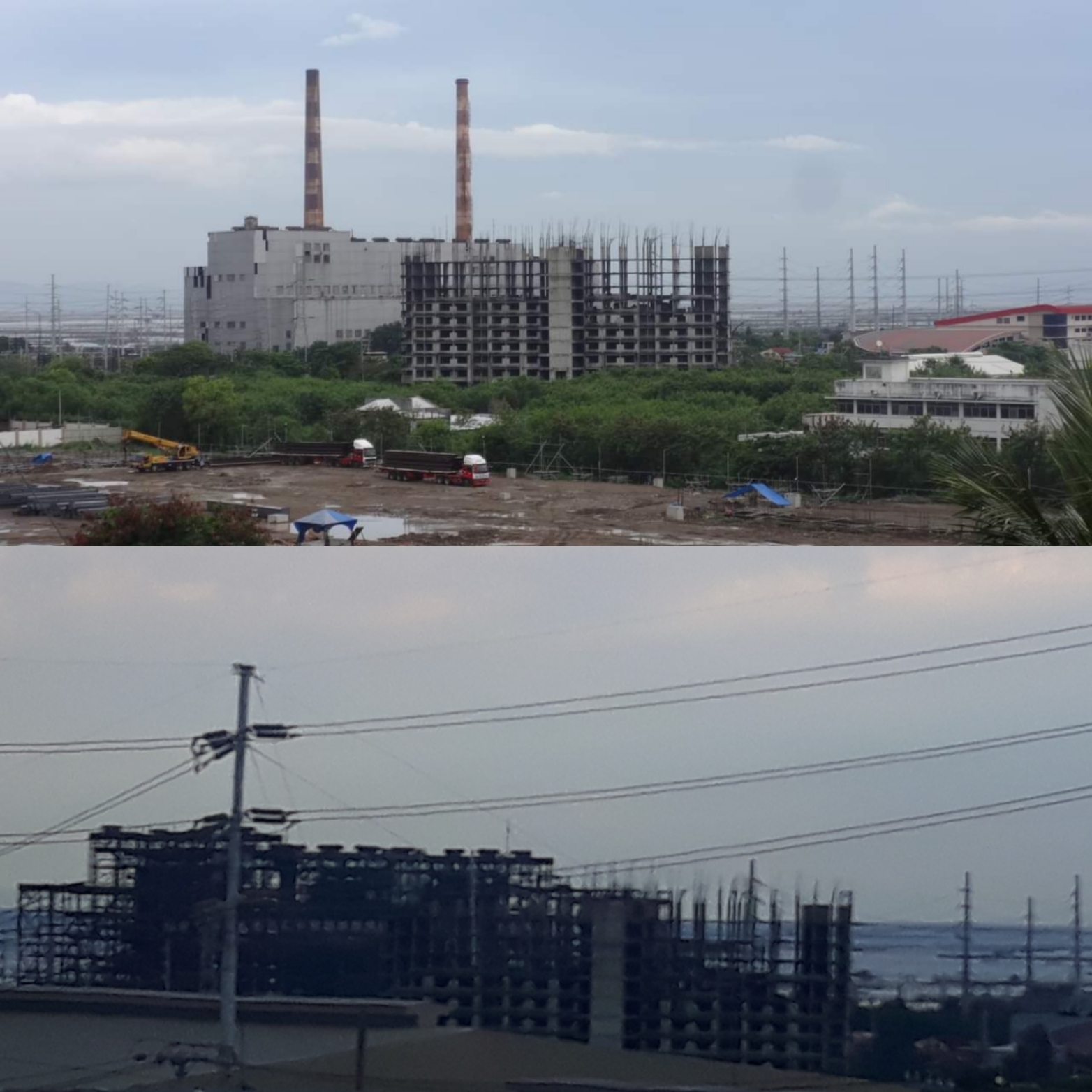
"The chimneys are gone."

"The chimneys are gone."

(Notes after the demolition of the old Garner-Snyder Thermal Power Plant 
in Sucat Paranaque)


It is quite lamenting that one of the monuments to ContemporAntiquity hath been dismantled in the name of 'progress'.

For condemned since 2017 and currently undergoing its demolition process, the former Gardener-Snyder Thermal Power Plant hath been a landmark for generations, provided power in Metro Manila alongside the Manila Thermal Power Plant (in Isla de Provisor) and the Rockwell Thermal Power Plant in Makati, making these once three known landmarks synonymous with power generation if not names like "Manila Electric Company" and the "National Power Corporation".

The power plant complex as shown by Google Maps
Map featuring MERALCO's Service Network featuring then existing Rockwell, Tegen,
and Gardner-Snyder power plants located

A commemorative item from MERALCO
Inside this complex was composed of three units. The original facility, which was made in 1968, consisted of Unit 1, which has a rated capacity of 150 MW; followed by Units 2 and 3, each with 200 MW; and Unit 4, which is rated at 300 MW, all made from 1970-1972.

However, in 1978, this once-Meralco owned facility, one of the structures the Lopezes or its former white owners taketh pride of, was acquired by the National Power Corporation as part of its expansion plan involving power generation and distribution. It was also during those periods wherein electrification hath been a major priority of the government-especially in the far flung areas where electricity hath been a major issue; thus, this power plant in Paranaque, as any other power plant, does contribute its share in its production.

On the other hand, the plant also hath a major share of its problems. Situated near Laguna de Bay, flooding became a major issue especially in mid-1972 when the complex then Meralco-owned, had to be completely shut down due to the overflowing of the lake and its subsequent submerging of vital power plant auxiliary equipment.
Also in relation to that 1972 flooding, that according to the release from the 1973 Meralco Securities Corporation report, that the floods also caused considerable delays in the transporation of heavy equipment to the cite of the lubricating oil refinery of Philippine Petroleum Corporation in Pililla, Rizal. While Philippine Engineering and Construction Corporation also experienced difficulties in its construction work projects, particularly on MERALCO's Montelibano Station Unit No. 1 and the PPC Refinery. So was the Philippine Electric Corporation (PHILEC) experiencing delays in the arrival of imported raw materials all due to floods.
Thus, this flooding problem became a matter which made rehabilitation deemed impossible. Furthermore, the passage of RA 8749 known as the "Clean Air Act" forced operations at the oil-fueled plant in a standstill all due to its emissions which exceed the limits brought by the law.

But despite encountering problems, operations continued until January 2000 when Units 1 and 4 were decommissioned and placed under preservation; followed by Units 2 and 3 were later in January 2002.

"The chimneys are gone."
Despite its decommission, there were plans to rehabilitate the site by restoring some of its units including those of making the plant taking a major role in the development of the country’s natural gas infrastructure via the proposed $2.1-billion Batangas-Manila natural gas pipeline project.

Old engines prior to its dismantlement
For according to a news article made by the Manila Standard last 2015, the former oil-powered power plant was to be converted into a natural gas-powered facility; alongside its privatisation with former Energy Secretary Carlos Jericho Petilla said the Sucat facility would be privatized “but whoever will take it will keep the site as a power generation site.”

Furthermore, former PSALM president Emmanuel Ledesma Jr. said the agency was still waiting for the final direction from the Energy Department on the Sucat privatization, “given the ongoing discussion on the power situation.” Ledesma also earlier bared plans to rehabilitate the decommissioned Sucat power plant. “As to the power plant itself, we are currently evaluating proposals to rehab some units of the plant,” he said.

But things turned out to be different for the supposed rehabilitation end as any other pipe dream- that aside from failed biddings and rebiddings, the fact that despite considering rehabilitation such plans were dropped after it was deemed too costly to recommission the plant compared to constructing a new one in its place and the facility is already flooded. Even former Energy Secretary Carlos Jericho L. Petilla said it was no longer advisable to jump-start the power facility again. Besides, it was more expensive to rehabilitate an old plant than to construct a new one.

The facility continued to remain idle, until last 2017 when PSALM was looking to transform the site of the 850-megawatt (MW) facility, this time into an energy-related project, a transportation hub or an economic zone.

But instead of its supposed rehab, the state-run maintainer of "power sector assets" opted to demolish altogether "to ground zero."

“Dismantling the Sucat plant will pave the way for the rise of a new development project that will benefit the host community and the country, in general,” PSALM Officer-in-Charge, Lourdes S. Alzona, said. Initial discussions include transforming the site into a location for an energy-related project, a transportation hub, or an economic zone."

The winning bidder, Riverbend Consolidated Mining Corporation, carrieth out the disposal of the plant structures. It has fully paid PSALM the purchase price of the decommissioned asset in the amount of PHP305.2 last July 31 2017. And with the satisfaction of closing deliveries, the asset turnover was held last Aug. 2 of that same year- that also marked the start of the 30-month implementation period for Riverbend’s dismantling and clean up obligations.

In the asset sale provisions, Riverbend was obliged to dismantle the facility and return the current site to ground zero, free and clear of wastes, toxic substances, debris and structures; while PSALM proceeded with the decommissioning of the pipeline embedded in the plant site that connects the Sucat, the former Rockwell, and the Manila Thermal Power Plant in Isla de Provisor near Pasig river.

Piece by piece, anything to be removed "till nothing."
(Feat. the old Siemens oil-fueled engines once used to generate
Metro Manila's electicity)
At present, the plant is still undergoing demolition, removing its steel for scrap be it the chimneys, wires, the old Siemens engines, anything that can be dismantled as the once known structure be end as an empty lot for a willing client.  People from all walks of life sought its demise and for sure most invoke their nostalgic memories such as the old familiar chimneys, described in various sorts ranging from giant wafer sticks or ovens for delicacies "Puto Bumbong" and "Puto Sulot"; while others just simply 'move on' thinking those structures as irrelevant, if not dirty as any other factory with chimneys on top regardless of its significance, therefore meant to be condemned altogether as any other old structure be it in Paranaque or in the entire Metro Manila itself like what happened in Isla de Provisor many years ago.

Afer all, the facility was auctioned off on an “as is where is” basis, with all the structures, plant equipment, auxiliaries and accessories included in the lot; “The successful sale of this asset advances the interest of the government as the proceeds will be part of the additional funding source for the liquidation of the National Power Corp.’s debts assumed by PSALM," as what Alzona saidth in its statement; while Riverbend, in response, had the obligation to dismantle, clean up, and remediate the enture site till ground zero- that again "free and clear of waste, toxic substances, debris, and structures" all prior to possible redevelopments.

Deviating isn't it? For as the structure, instead of being maintained and for possible reimprovements related to power generation as supposed to be in its earlier agreements, hath been end dismantled altogether thinking that a development project may take place of that building- such as an economic zone that's familiar to most people "let's just say a cluster of call centres perhaps? Or a shopping centre? Or condominiums?" All similar to the Rockwell center whose complex is situated in the former power generating facility. Like Sucat, it was closed due to environmental reasons.

With all these events, would think that this person, like any other nostalgic is saddening that with this decades-old monument to a "promised future" hath been undergone demolition after years of neglect meant leaving its memories in a form of pictures in various nostalgia pages in social media sites, blogs, or newspaper and magazine articles- altogether acting as archives showcasing those pasts.
In fact, for as far as this person knows that with the power plant having supposed to be reactivated for another power generating-related purpose, seeing it end rather scrapped in favour of "possible alternatives" is itself an alibi for certain developers to see deviations as what stated earlier, trying to change the nature of the district, if not the city from an industrial complex to a potential commerical one following those of its neighbours. Barrio Ugong for example, was once equated to factories ranging from textiles to food products, but recent trends affected this once industrial district, hence, some lots were once factories stood paved way to high-rise commercial towers, "economic zones" as one would say.

***

But despite this lamentation, why is it this writer calls that known structure a monument to ContemporAntiquity? Again,  from the word itself, it is contemporary knowing that the structure was made in mid 20th century and used till late, while at the same time time its quest to generate electricity was itself coming from a distant past, hence, antiquated. This writer believes that those structures were more than just utilitarian in its appearance, but rather invoked a future that's rooted, amplifying the demand for restoring socionational greatness through new technological forms to harness industries of both present and future. Wouldn't be surprised that there were times engineering students visited the site, seeing a wonder of the past such as push buttons and meters, of boilers and generators whose machines were once humming as it generates electricity from oil, and of course, the familar chimneys that became part of Paranaque's skyline.

But as this note goes, recent economic thoughts like globalization, neoliberalism, and all the likes that surrounds modern-day capitalism lies the need to abandon these once proud edifices altogether and therefore be demolished in favour of those demanded by their clientele. This person wouldn't be surprised that structures like those, no matter how significant they were its community would end demolished just to meet the demands of that profiteering clientele such as a mainlander wanting to see a dull skyscraper over a heritage district; if not seeing the once- lush green-gold ricefields paved way to subdivisions where those who dwell aren't the have-nots politicians promised  decent housing.  

Wednesday, 19 June 2019

"Still, this doesn't end the tension"

"Still, this doesn't end the tension"


Earlier, the captain of the fishing boat FB GEM/VER apologized to president Duterte "after his comments made it appear he backed out of the supposed meeting with the president."

In an article from ABS CBN News, Capitain Junel Insigne, faced the media and said he was not aware that it was Agriculture Secretary Manny Piñol, not Duterte, who asked to meet him in Manila.

For earlier this week, Capt. Insigne said he would meet Duterte to demand accountability after a Chinese vessel Yuemaobinyu 42212 rammed his boat and left him and his 21 crew members in open waters.
However, Capt. Insigne said he backed out of the meeting because he suddenly felt ill.

At this time, with Agriculture Secretary Piñol beside him, Capt. Insigne apologized to the president because "his statement made it appear he ditched the President."

"I apologize to our dear president, that he did not call me but Secretary Piñol. I did not go because I felt bad," Insigne said in Filipino during a press conference in Occidental Mindoro.

Furthermore, the captain also appealed to Duterte to help them obtain justice from the perpetuator- even as the chief executive earlier downplayed the incident, much to the captain's dismay.

***

Regardless of the recent apology by the capitain of the fishing vessel due to miscommunications with Malacanang, hope this doesn't equate to compromising justice and truth. 

For knowing that the regime as trying to upheld Philippine-Chinese relations, it is "natural" for them to be skeptical in regards to the incident; yet, this skepticism, what more of a downplay, hath rather fueled discontent, especially after a leader who described the sea ramming incident as a mere "hit and run". 

Ridiculous if not anger provoking isn't it? And no matter how some of its apologists trying to "calm down tensions" between an indifferent administration and an angry folk, this downplaying brought by a fellow Filipino hath made worse than the ramming incident brought by a Chinaman.- and to think that it is "natural" for the order to be skeptical towards this matter, then so is the folk also being "skeptical", or even "annoying" on how the order treated its fellow folk, be it this incident or any other incidents the order tries to evade as such. 

Anyway, what else should happen so that the folk would be able to finally come to their senses? Will the order trying its 'best' to steer them from reality with its debt-driven concrete delusions of development and grandeur (especially those financed by the Chinese), if not by blaming the opposition for seeking truth from facts?

No matter what the order tries to suffice the issue, of retractions and gifts, still, this doesn't end the tension.

Tuesday, 18 June 2019

"No 'accident' will stop the Filipino from asserting truth and sovereignty."

"No 'accident' will stop the Filipino from asserting truth and sovereignty."

(Notes on the recent accident at Recto Bank, West Philippine Sea last June 9, 2019)


It cannot be denied that Supreme Court Associate Justice Antonio Carpio is correct that the Philippines should take a strong, proactive stand against China's agression amidst this tragic event against Filipino fishermen last June 9.

But by seeing Duterte et al. failing to make a strong stand against this agressive act, this shows the regime fails to heed its people, especially victims of the fishing vessel FB Gemvir 1 that was rammed by Yuemaobinyu 42212 in Recto Bank of the West Philippine Sea.
Worse, by seeing apologists trying to whitewash tensions all in the name of "Sino-Philippine relations", of Spokesman Panelo downplaying, rejecting as "premature" or "speculation" those who condemn China for violating UNCLOS* and to bring Chinese seamen to trial; if not condoning China's statements like in the case of Foreign Affairs Secretary Locsin telling "China can say anything it wants."

Quite lamenting at first isn't it? Knowing that this tragic incident happened when Filipinos were celebrating its independence day, it end subjected to debates (like Sasot vs. Hedayrian), downplaying (like Panelo), ridiculing (like Locsin Jr.), instead of urging people to unite and assert its sovereignty even at the expense of agreements and monetary aid- or is unity be limited to boxing matches? Basketball? Beauty pageants while this serious matter be downplayed as a politician's matter?

Well, no matter how apologists would defend their dear leader then come to think of this: Duterte is becoming a bootlicker to both Western and Chinese interests- that for the purpose of keeping the loyalty of the American-leaning officers in the Police and in the Armed Forces, as well as for currying western investments, he retains all the agreements, treaties, as those of his predecessors that makes US imperialism continue to dominate Filipino affairs; while at the same time accepting agreements wholehwartedly by the Chinese, including having its resources treated as collaterals and letting Chinese labor "do their work" at the expense of Filipino labor.

With these shows how this country continues to remain an appendage no matter how it appears to be "developed". That alongside retaining existing agreements from the Americans, having a country selling its sovereign right over the west Philippine Sea, particularly its shoals, isles, rocks, marine and mineral resources to the Chinese also made the country tied to their interests as such; with apologists trying to justify its high interest loans and overpriced infrastructure projects.

Yet, regardless of this, this doesn't stop people from seeking truth from facts and to expose, oppose this venture the order hath benefited from. The recent incident as well as earlier ones should be a wake-up call for each and every Filipino to stand up and assert no matter how apologists, fanatics, may try to counter this reality. This situation is no Cold War hysteria as what most people think of, for there is no "communism versus liberal democracy involved" in a matter that involves territorial integrity and the right of its people to assert as sovereigns; but to see China stubbornly trying to upheld its foothold at the expense of its neighbours, what more to see a subservient order, then it is the will of the people to stand up and fight without their discretion.

Anyway, China isn't red as what people think of.

*UN Convention on the Law of the Sea

Wednesday, 12 June 2019

"Neither Patriotic nor Radical"

"Neither Patriotic nor Radical"

(Or: "Notes all after Duterte preaches defending independence and change
an a still reactionary order")


"Neither Patriotic nor Radical".

These are the words this person and others concerned in regards to the Duterte administration this day of independece. For as he and his camarilla would still claim to their state affairs as patriotic-driven and radical in its action in "bringing changes", it seems that reality is actually more like contrary to the words being stated in this note- all thanks to their very selves who are submissive towards theirs and their overlord's interests.

With words like "President Rodrigo Duterte hopes for true independence for the country "within our lifetimes," he said in his 2019 Independence Day message on Wednesday, June 12.", would say that there's a lot of time to struggle just to upheld the country and its independence especially in facing greater challenges particularly those brought by the order he sworn to protect.

Initially, Duterte is right that for over a hundred and twenty-one years that the Filipinos of the past bound their lives and fortunes to fight and proclaim their independence. But as reality continues to be at the hands of an oppressive order, be it by an unjust decree, an unfair decision, or an extrajudicial act all in the name of interest,  then that fight for independence continues to remain still- this time by the poor and of the oppressed, whose lives would say had enough of their contentment over injustices, of getting discontent over unfairness and injustices, and with their struggles would say that "the tree of liberty blossomed on these lands because it was nourished by the sweat and blood of our patriots, heroes, and martyrs."

For sure his apologists would disagree on to this, instead clinging to their idol's "optimistic statement" that all Filipinos should "help uplift the country" regardless of its soiled acts and connivances with entrenched interests and its foreign backers, that keeps Filipinos from ever getting uplifted as what the president saidth in his statement.

***

As far as this person observes, that despite the celebration of independence, of expressing statements of change, reform, and stability, that reality goes something like this: that the so-called "republic of the Philippines" is a charade, that the government is full of delusion, that the constitution is being diluted by self-proclaimed orderists, that there is only a vassal of the imperialists. 

How come? For a concerned who expressed this thoughts, the country has been enduring this reality for decades, especially that amidst the so-called atmosphere of development, this doesn't benefit the majority who supposed to enjoy its fruits. That from the infrastucture being done to the rice being sold, each taxpayer has to pay the debt that brought that structure, or the farmer who forced to sell their palay cheap to the middlemen if not their farm to the developer who wishes to transform those into houses for the well-offs in the city. 

Sorry for the words but with this truth, being cruel and unrelenting, makes one make peace with mentally before thinking ahead. It is true that in being vassal every policy, law, to those of project, infrastructure, is driven by the order whose desire is to keep interests firm, while at the same time making the people subjected to the rules and at the same time having a feel of being satisfied no matter how small it is given to them. 

This is less to do with coup plotter idealists or the self-proclaimed analysts in Social media, but in their intellectual exercises they drift off into idealism as the situation agrows worse: for apologists ranging from a disgruntled activist Nilo Tayag or the frustrated anarch Sass Sasot trying to insist that the leader Duterte is patriotic if not radical, but is he? As far as this writer knows that he tried to but end otherwise being an apologist of the order, so are the apologists who once claiming to be for change by any means only to be settled down by their legalism and its perchance for reform. But the fact that they justify their dear leader's  actions and statements would say that they bring the country to the dogs, that they exchange the country for some pieces of silver while claiming that this for the country's good. After all, they aren't not like Brockdorff-Rantzau who did refused to sign the treaty of Versailles after Germany's defeat in WWI, yet he is the same man who died embittered in his lips as he said: "Everything for me has been shattered-I already died in Versailles." Thinking that he failed his duty for the country.

Sadly to say, the ones this person stated in this note aren't like the one admitting. Like their predecessors claiming to be patriots would claim that everything is under control as their idol performs good works if not justifying the need for an extrajudicial act as a form of imposing justice. It is no longer surprising for a concerned tho, for the atrocity laidth by the order, be it drug related killings, of targeting activists for arrest/disappearance, and increasing numbers of collateral damages, along with increasing debt and taxes, outweighs the infrastructure projects being built or currently set upon, the 'strong economy' being praised, or the soup kitchen being promoted, anything the administration afforded to brag in making a backward country appear to be "on a right track" if not a reactionary appearing to be a a "revolutionary" in the eyes of an ever concerned people.

***

If to paraphrase Adam MĂ¼ller's 'Die Elemente der Staatskunst', this person is ought to say that the state and by extension the community, hath to be not a mere factory, farm, insurance agency or a commercial company. It is not even like a device or a tool meant to out things in order as one would wish, but rather it is the inner union of all physical and moral needs, of all physical and spiritual wealth, of the inner and outer life of a folk community, all in a great, energetic, eternally active and living whole.

It may sound illusory if not fictional, but man's quest for an ideal community hath been since time immemorial, that in every interaction be it right or wrong lies the totality of human affairs if not a union of many successive generations. But reality failed to realise as such and turned the state into a tool of consolidation than a spearheader of change. Duterte did sneered people through the ears by telling his administration as socialistic, that his rule as just if not enlightened, but given the bloodshed and the interest prevailing, is his change be considered a vulgar form of Marcos's 'constitutional authoritarianism'? Vulgar in a sense that it is divorced from the law by making the law less lawful if not amoral?

In fairness for the late dictator that he himself recognise the state as consolidatory while trying to appear itself a spearheader of change in order to address issues like poverty. Like MĂ¼ller as well as Fichte, he sees the state as a factor to unite physical, moral, and spiritual wealth to revive the lost consciousness and drivel to achieve progress and stability. From his book 'Notes in the New Society', he, assuming to be progressive, speaks on why the rebellion of the poor may take various forms, if not a search for an ideology which makes that rebellion be the basis of the new society:

"Moral realism requires this ideological basis: the consciousness of the poor permates them with a profound sense of being oppressed, and not simply because the rich oppresses then brazenly but it is poverty itself that oppresses them.

To be poor is to be without, and, therefore, to be an outsider in the vibrant and meaningful political, economic, and social life of modern human community. Above all, being poor is being invisible; violence makes them visible."

But despite the order's means to let's just say "achieve development", dissident agitation for social change has comparatively more success given the structure's half-hearted action for social amelioriation. After all, it was the same Marcos who opted to leave his predecessor's decontrol untouched thinking it is inseparable to free enterprise. So was the floating rate in Peso, the junking of the Magna Carta of Social Justice and Economic Freedom, and the membership in the "General Agreement on Tariffs and Trade"'(GATT).

And Duterte opted to emulate it: continuing VAT with an additional enabling law like TRAIN, the policy of borrowing from neighbouring countries and multinational moneylending institutions, obeisance to existing economic agreements, and others that made Duterte's change more like a continuity with new terms and paraphrased statements. Apologists may disagree or critically accept this note out of sheer defence of their idol for Marcos and Duterte tried their "best" to save the republic, maintain order, and bring some "reforms" whose goal is to upheld cohesion amidst popular criticism. But to cite George Magnus:

"Policy makers struggling to understand the barrage of financial panics, protests, and other ills afflicting the world would do well to study the works of a long-dead economist: Karl Marx. The sooner they recognise we're facing a once-in-a-lifetime crisis of capitalism, the better equipped they will be to manage a way out of it..."

From there, one would say that those from the order did afford to study Marx, of recognising his work particularly those of "class struggle" and the likes, then refuting him out of sheer defense of "democracy" amidst the threat of "communist subversion" if not insisting th need for economic liberalisation and the impossibility of having self-reliance amidst prevailing globalisation and neoliberalism. At some cases they would imitate Marx, et al. in their so-called "struggle against the oligarchs" only to be concluded with their distorted version of corporatism and its cooperation with the elites in the society they've once called "rotten." It is not surprising in seeing them reading either to refute or to make concessions with the working masses "just to avert a revolutionary tension", not just the usual conservative "need for industrial and social peace".

Anyway, Duterte and his fanatics will still cling to their view that their brand of authoritarianism as democratic if not revolutionary. But the revolution can only be made with revolutionaries and not structuralists. Theirs, be cold and calculating, are rather like melancholic ghosts wandering around Malacañang trying to reclaim the past in a guise of creating a future. Someone by temperament and through experience mistrustful of others, whom they see only motivated in their turn when induced by base interests; skeptical about their views despite parroting it, poor Duterte for as he becoming a negation of what people desired of- and so is his camarilla.