
Sovereignty, Nation-Building, and the Limits of Practicality:
On the contributions of Philippines's Quezon, Puerto Rico's Muñoz Marín,
and the Politics of Limits
The history of the twentieth century was not merely a history of decolonization. It was also a history of arguments about what freedom itself meant. As empires retreated and old colonial orders weakened, peoples across Asia, Africa, the Caribbean, and the Pacific confronted a question that proved more difficult than independence alone: what should be done with freedom once it became possible?
For some, the answer was straightforward. A people conscious of itself as a nation should seek political expression through a sovereign state. Culture, language, memory, and historical experience were not ends in themselves but foundations upon which institutions, citizenship, and self-government could be built. Nation-building therefore became inseparable from sovereignty. A nation that understood itself as a nation was expected to govern itself.
For others, however, the question appeared less certain. The twentieth century was also an age of economic interdependence, geopolitical asymmetry, military alliances, migration, and unequal development. Many communities discovered that sovereignty could be costly, fragile, and difficult to sustain. Independence promised dignity, but it did not automatically provide prosperity. Self-government offered political fulfillment, but it did not guarantee security. As a result, some political leaders began to ask whether the traditional nation-state remained the only acceptable destination of national consciousness.
This tension produced one of the central dilemmas of modern political life: the relationship between practicality and aspiration. Should a people pursue sovereignty despite the constraints imposed by geography, economics, and international power? Or should those constraints define the limits of political ambition? At what point does realism cease to guide national aspiration and begin to replace it?
The question was not merely theoretical. It confronted leaders throughout the colonial and postcolonial world. Some regarded practical limitations as obstacles to be overcome through preparation, institution-building, and political struggle. Others regarded those same limitations as permanent realities requiring accommodation. The disagreement was not simply about policy. It was about the meaning of self-determination itself.
Historically, self-determination referred to the collective right of a people to determine its own political future. It emerged from revolutions, anti-colonial movements, and nationalist struggles. It assumed that a people was more than a population and that a nation was more than a culture. Self-determination was therefore not merely the right to preserve identity. It was the right to exercise political agency.
Yet throughout the twentieth century another interpretation gradually emerged. Self-determination increasingly came to be understood not as the collective capacity of a nation to govern itself but as the ability of individuals and communities to preserve their identity while pursuing welfare, security, mobility, and prosperity under whatever arrangement proved most advantageous. The focus shifted from sovereignty to management, from nation-building to administration, and from political destiny to practical outcomes.
This essay examines that tension through the contrasting examples of Manuel L. Quezon of the Philippines and Luis Muñoz Marín of Puerto Rico. Both operated within the orbit of American power. Both understood the realities of dependency. Both rejected empty romanticism. Yet they arrived at fundamentally different conclusions regarding the relationship between nationhood and sovereignty.
Quezon treated practicality as a means toward nation-building. Muñoz Marín increasingly treated practicality as an alternative to it. Quezon regarded limits as conditions to be negotiated, renegotiated, and eventually overcome. Muñoz Marín increasingly accepted those limits as the framework within which national aspirations should remain. For Quezon, culture pointed toward sovereignty. For Muñoz Marín, culture increasingly became sufficient unto itself.
Between these two approaches lies a larger question that continues to confront nations today: whether realism should discipline aspiration or diminish it, and whether a people can truly be said to possess self-determination when it preserves its identity but leaves the final exercise of political authority elsewhere.
The comparison between Quezon and Muñoz Marín is therefore more than a study of two historical figures. It is an examination of two competing visions of nationhood itself. One understands the nation as a political project seeking sovereign completion. The other understands the nation as a cultural community capable of fulfillment without a state. One sees practicality as a road. The other increasingly treats practicality as the destination.
The debate between them remains unfinished because the question they confronted remains unresolved: Is sovereignty the culmination of nationhood, or is nationhood complete even without it?
Quezon, Muñoz Marín, and the Politics of Limits: Strategy,
Practicalism, and the Meaning of Self-Determination
If one seeks a revealing comparison for Luis Muñoz Marín, it may be Manuel L. Quezon. The comparison is tempting because both men emerged from territories under American sovereignty. Both operated within political systems shaped by Washington. Both understood the realities of power, law, administration, economic dependence, and modern constitutional politics. Both knew that a people under the authority of the United States could not simply shout freedom into existence and expect empire to disappear. Yet their conclusions regarding nationhood could not have been more different.
The difference did not lie in whether one was realistic and the other idealistic. Both understood reality. Both knew the language of compromise. Both knew that the modern world rewarded preparation, institutions, discipline, and political calculation. The difference lay in what realism was meant to accomplish. For Quezon, realism was a means of approaching sovereignty. For Muñoz Marín, realism increasingly became a justification for remaining within the limits imposed by dependency.
Quezon and the Politics of Negotiated Limits
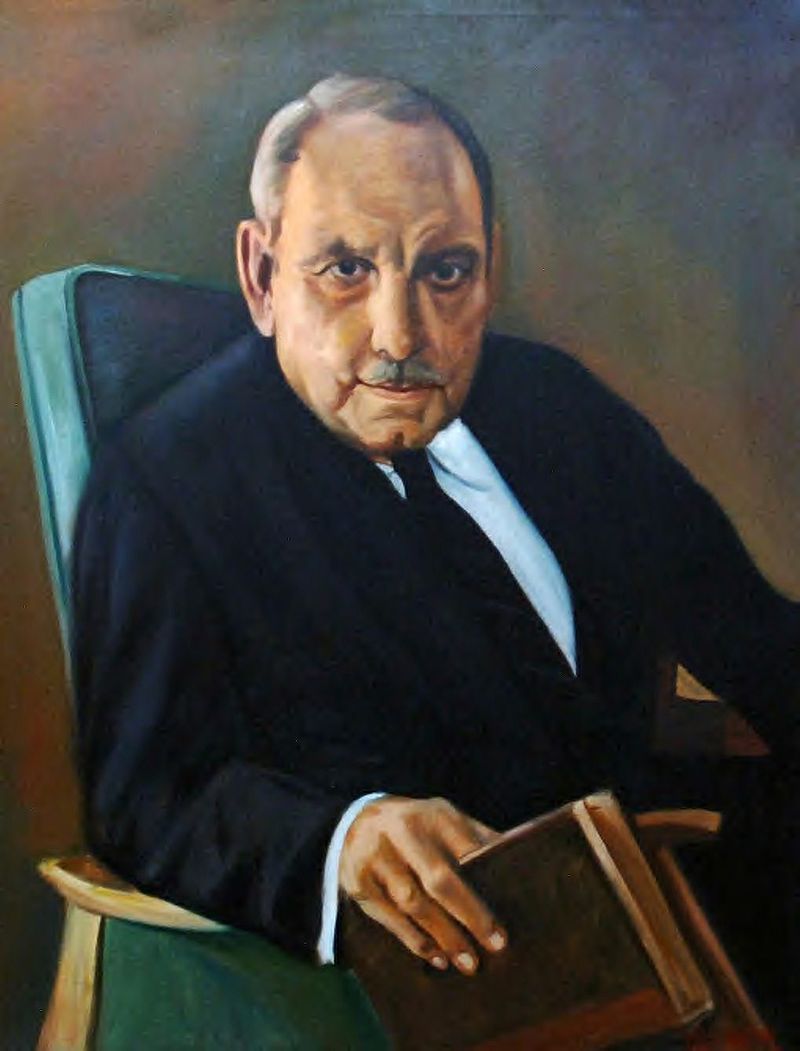
It would be inaccurate to describe Quezon as a practicalist in the same sense as Muñoz Marín. Certainly, Quezon spoke the language of practicality. His life itself embodied political transition: a former officer of the revolutionary struggle and servant of the First Republic who became a provincial fiscal, legislator, resident commissioner, Senate president, and eventually president of the Philippine Commonwealth. He moved through institutions created by American colonial power, negotiated with American politicians, mastered legislative procedure, and presented Filipino aspirations in terms American policymakers could understand. Yet his use of practical language should not be mistaken for practicalism as a political philosophy.For Quezon, pragmatism was never the destination. It was a method, and more precisely, a discipline. The language of realism existed to serve a nationalist conclusion. The objective remained the construction of an independent Filipino state. He understood that a colonized people could not obtain independence by sentiment alone. It had to argue, organize, legislate, administer, and prepare. It had to show capacity not because capacity replaced sovereignty, but because capacity strengthened the claim to sovereignty.Quezon understood limits. He understood that the Philippines could not merely declare itself independent and expect the world to obey. He understood military weakness, economic dependence, constitutional realities, factional politics, and the immense power of the United States. Yet he did not regard these limits as permanent boundaries defining the horizon of Filipino aspiration. Limits were real, but they were not final. They were conditions to be negotiated, renegotiated, delayed, paid for, overcome, or converted into stages toward independence.This is the essential point. For Quezon, limits were not a settlement. They were a problem. If a price had to be paid, then it had to be paid. If a period of preparation was required, then preparation would be undertaken. If institutions had to be built, they would be built. If compromises had to be made, they would be made. If American opinion had to be persuaded, then it would be persuaded. The point was always movement. Practicality mattered because it led somewhere.This is what distinguished Quezon’s realism from practicalism. His realism was guided. It was rooted in an end that transcended immediate circumstance. The practical step was valuable only because it moved the nation closer to self-government. The Commonwealth itself was not the fulfillment of Filipino nationhood but a stage toward it. It was a bridge, not a destination. The Tydings–McDuffie Act of 1934 created the Commonwealth as a ten-year transition toward independence, and Quezon’s leadership must be understood within that structure of eventual sovereignty rather than permanent accommodation. (Wikipedia)In this sense, Quezon employed the language of the contemporary West against the political conclusions of empire. He had been formed partly by the classical examples of Europe and the Hispanic world, but he also understood that the twentieth-century argument for statehood had to be made in the language of constitutionalism, institutional maturity, and national capacity. If Americans argued that self-government required preparation, Filipinos would prepare. If constitutional government required administrative competence, Filipinos would demonstrate competence. If statehood required institutions, Filipinos would build institutions. The standards of modern nationhood would not be rejected; they would be mastered and then used to justify independence itself.This was not submission to Western logic but its reversal. Quezon understood that empire often justified itself by declaring the colonized unready. His answer was not to abandon the idea of readiness, but to appropriate it. If readiness was the imperial condition, then readiness would become the nationalist weapon. If America claimed to teach democracy, then Filipinos would demand the democratic consequence of that teaching. If America proclaimed self-government as a principle, then Filipinos would insist that the principle apply to them.This is why Quezon’s politics cannot be reduced to mere expediency. He endured criticism from those who viewed independence as impractical and preferred autonomy, permanent association, or eventual statehood within the American system. Yet he did not accept the premise that comfort under empire was superior to the burdens of independence. The question was not whether American rule could offer advantages. It could. The question was whether a people that understood itself as a nation should remain politically subordinate because subordination was convenient.For Quezon, therefore, the nation was not merely cultural. It was what might be called a perso-communal reality. He may be said to have understood, even without needing Bauer’s categories, that the Filipino was a collection of persons conscious of their Filipino-ness. Yet he also knew that the Filipino, regardless of ethnicity, region, language, or local ancestry, was not simply a bearer of memory, religion, custom, or cultural personality. He was a member of a political community capable of collective self-government. Culture was not the end of the process but its beginning. The nation became complete only when it found institutional expression in a state of its own.This distinguishes Quezon from a purely cultural nationalist. He did not imagine Filipino identity as something satisfied by festivals, songs, dress, cuisine, or sentimental memory. These things mattered, but they were not enough. The Filipino was not to be merely preserved as Malay, Christian, Hispanicized, American-educated, regional, or diasporic. The Filipino was to become a citizen of a state. The political task was to transform a people conscious of itself into a nation capable of governing itself.Muñoz Marín and the Politics of SettlementLuis Muñoz Marín followed a different path. Like Quezon, he understood power. Like Quezon, he recognized the constraints imposed by geography, economics, and American dominance. Like Quezon, he knew that political dreams unsupported by capacity could easily become illusions. Yet where Quezon treated limits as obstacles to be managed in pursuit of sovereignty, Muñoz Marín increasingly treated those limits as the framework within which Puerto Rican aspirations should remain. His early political life contained pro-independence and nationalist currents, but his mature project moved toward Commonwealth status, industrial modernization, cultural preservation, and durable association with the United States.This is the crucial distinction: Quezon accepted limits without accepting them as final, while Muñoz Marín increasingly accepted limits as the settlement itself.What had been an obstacle became an arrangement. What might have been a stage became a destination. Puerto Rico’s relationship with the United States ceased to be a condition to be overcome and became the practical answer to the national question. To his defenders, this represented wisdom. To his nationalist critics, it represented a contraction of political imagination.This transformation reveals the deeper character of Muñoz Marín’s politics. He did not deny Puerto Rican identity. He defended it. He preserved Puerto Rican language, culture, literature, memory, and local institutions. He did not seek to make Puerto Ricans culturally indistinguishable from Americans. On the contrary, he understood the importance of Puerto Rican personality. Yet he increasingly ceased to regard sovereign statehood as the necessary conclusion of that identity. Puerto Rico would remain Puerto Rican without becoming fully independent.To his defenders, this represented practicality. It acknowledged geopolitical realities while preserving cultural distinctiveness. It allowed Puerto Ricans to retain their language, identity, and institutions while benefiting from citizenship, mobility, economic integration, and political stability. Muñoz Marín could be presented, therefore, as a statesman who protected Puerto Rico from both assimilation and impractical separatism. Under this interpretation, Commonwealth status was not betrayal but balance.Yet nationalist critics see the matter differently. To them, the apparent balance concealed a profound reduction of self-determination. The Puerto Rican could speak Spanish, sing La Borinqueña, celebrate local culture, preserve artistic life, and maintain a distinct public personality. Yet the harder task of sovereign nation-building—the possession of final political authority—remained attached to another state. In that arrangement, culture was preserved, but sovereignty was deferred.The contradiction became sharper with the Ley de la Mordaza, or Gag Law, of 1948. Passed by the Puerto Rican legislature and signed by the U.S.-appointed governor Jesús T. Piñero, the law criminalized pro-independence expression and was widely understood as a measure to suppress the independence movement. It made certain nationalist expressions, associations, and advocacy subject to punishment at precisely the moment when Muñoz Marín and the Popular Democratic Party- whose original orientation was Nationalism, were moving toward the Commonwealth formula.This matters because it complicates the practicalist defense. The Commonwealth settlement did not simply coexist peacefully with nationalism. It emerged in an atmosphere where pro-independence politics could be treated not merely as dissent but as a danger to be contained. While Muñoz Marín advanced industrialization and Commonwealth status, the political order around him restricted the very forces that insisted Puerto Rico was more than a culture. Practicality did not merely answer nationalism; it helped discipline it.The problem, then, was not that Muñoz Marín abandoned Puerto Rico in any simple emotional sense. The problem was that he transformed the meaning of Puerto Rico. Puerto Rico could increasingly be understood literally as a “rich port,” a place of investment, development, and managed cultural distinction, even as the more difficult work of sovereign nation-building was shortened, postponed, or declared unnecessary. The nation was no longer understood primarily as a political community seeking sovereign expression. It became a cultural personality capable of fulfillment without statehood.This is where the charge of reductionism becomes strongest. Muñoz Marín recognized self-determination, but he cut it short. It became less the right of a people to determine its collective future and more the right of a people to preserve identity within a practical arrangement. Puerto Rico could remain a matter of language, dress, art, memory, literature, music, local culture, and Hispanic inheritance, while final authority remained elsewhere. His cultural policy makes this tension clearer. Operation Bootstrap emphasized industrialization, while Operation Serenity attempted to balance modernization by promoting culture, the arts, and a defined Puerto Rican personality. Scholars have noted that Operation Serenity centered on cultural and humanistic values in response to the strains of industrialization and modernization. To defenders, this was cultural protection. To critics, it was cultural compensation. It soothed the anxieties created by dependency and modernization without resolving the political question of sovereignty.Here one sees the practicalist temptation in its most sophisticated form. The nation is not erased; it is curated. Its language is defended. Its songs are permitted, though often emptied of their original political force. Its dress, art, literature, and local personality are celebrated. The people are encouraged to remain themselves. Yet they are not necessarily encouraged to become sovereign. Culture becomes a substitute for political completion.In this sense, Muñoz Marín’s project bears a striking resemblance to the logic of Otto Bauer. Bauer understood the nation as a community of character formed through a community of destiny. In his famous formulation, a nation was “a totality of men united through community of fate into a community of character.” Such a conception need not require sovereign statehood. The nation may be carried by persons through language, memory, historical consciousness, and cultural inheritance.Puerto Rico under Muñoz Marín could therefore be imagined less as a republic waiting to be born than as a community of persons already complete in themselves. The Puerto Rican remained Puerto Rican wherever he resided. His identity survived through language, memory, culture, music, religion, family, and historical consciousness. The nation followed the person rather than being embodied in a sovereign state.

When Self-Determination Sometimes Becomes Advertising:
Otto Bauer, Culture, Sovereignty, and Aspiration
It is not surprising that the postcolonial/or Neocolonial setup in Developing and Underdeveloped countries comes a debate between nationalism and practicalism. Looking at the examples of the Philippines and Puerto Rico, these countries borne out of Spanish and American colonialism brought questions on nation building and self-determination: that Quezob has to realize the aspirations of his fellow nationalist even it meant using the language of the colonizer, while Muñoz Marín chose to reduce an aspiration into a matter to satisfy with even it meant at the expense of a belief.
The practicalist regards this as maturity. The nationalist sees something else: a lowering of aspiration.
The nationalist sees a people persuaded that preservation is enough. He sees a nation encouraged to remain culturally alive while politically unfinished. He sees self-determination transformed from the collective capacity of a people to govern itself into the individual capacity of persons to choose the arrangement most beneficial to their welfare. He sees a people taught to ask not “How shall we govern ourselves?” but “How shall I live best?”
This shift in language is decisive. Historically, self-determination referred to a people’s right to determine its collective future. It emerged from revolutions, anti-colonial struggles, and demands for political recognition. It assumed that a people was not merely a population but a historical actor. Under practicalist reasoning, however, the emphasis shifts from the people to the individual. The question changes from “How shall we govern ourselves?” to “How shall I live best?” Worse, the question of identity shifts from “How shall I fulfill my obligation as a Filipino, Puerto Rican, or member of a people?” to “Am I required to be Filipino or Puerto Rican at all?”
Thus, what was once a national aspiration becomes a personal calculation. This is how self-determination becomes advertising. It is no longer the stern political claim of a people seeking to shape its destiny. It becomes a display of cultural options. Filipino-ness or Puerto Rican-ness can be expressed through costume, music, food, skin, tourism, festivals, beaches, tattoos, dress, nostalgia, and marketable warmth. The citizen becomes a brand ambassador of heritage rather than a participant in sovereignty. National identity becomes an aesthetic. The people remain visible, colorful, and emotionally resonant, but their political aspiration is softened.
This is not because culture is unimportant. Culture matters profoundly. Language, dress, music, literature, and memory are not trivial. They are the living tissue of a people. But when they become substitutes for self-government, they can also become instruments of containment. A people can be encouraged to celebrate its identity while lowering its political demands. It can be told that being recognizable is enough, that preservation is enough, that personality is enough.
This is the point at which practicalism becomes reductionist. It does not destroy the nation directly. It stunts the aspiration by redefining the terms. It reduces the nation into culture, self-determination into individual choice, sovereignty into inconvenience, and political destiny into lifestyle. It does not command a people to forget itself. It tells them that remembering is sufficient.
Quezon’s realism moved in the opposite direction. He did not use practical language to reduce the Filipino to a cultural person. He used practical language to produce the Filipino as a political citizen. The Filipino had to understand the ways of the West not in order to surrender to them, but in order to counter them using their own logic. If law was the language of power, Filipinos would speak law. If institutions were the measure of readiness, Filipinos would build institutions. If democratic consent was the moral claim of the age, Filipinos would demand that consent be honored. Thus, this is why Quezon’s nationalism was not simply emotional. It was strategic. It saw that the national aspiration had to be disciplined. It had to pass through institutions, budgets, statutes, schools, negotiations, and constitutional conventions. It had to convert revolutionary will into governmental capacity. But the discipline did not replace the aspiration. It served it.
Muñoz Marín, by contrast, increasingly left the limit as it was. He did not simply recognize constraints; he made peace with them. He did not merely postpone sovereignty as a matter of timing; he helped redefine Puerto Rican nationhood so that sovereignty no longer appeared necessary to its fulfillment. The limit became the arrangement- and if necessary, be undergone referendums yet the situation remained the same: Either you accept Statehood or remain as an Associated State since the idea of Independence, although noisy, is becoming insignificant to an already practicalist populace- unless a situation makes Independence breaks the cycle of enforced practicality. For now, the courts, the departments, the leadership, and local governments already been acting "on behalf of a benevolent state who just left them speaking Spanish." This arrangement became the identity- and the identity became sufficient.
This is why the contrast between Quezon and Muñoz Marín remains so revealing. Both men understood reality. Both rejected empty romanticism. Both operated within the shadow of American power. Yet Quezon used the language and idea of realism to move beyond dependency, while Muñoz Marín increasingly used realism to justify a durable accommodation with it and to make people contented in it. One saw practicality as a means toward sovereignty. The other increasingly treated practicality as a substitute for sovereignty. One believed that limits could be negotiated, renegotiated, and eventually overcome. The other increasingly accepted those limits as the permanent horizon of political possibility.
The difference may be expressed simply: Quezon learned the language of empire in order to defeat empire’s conclusion. Muñoz Marín learned the language of modern politics in order to make dependency culturally acceptable and politically durable.
Conclusion: Two Answers to a National Question?
This distinction remains relevant far beyond the histories of the Philippines and Puerto Rico. Every nation faces the question of whether realism should guide aspiration or replace it. The danger of practicalism is not that it destroys a people. It is that it persuades a people to lower the horizon of what it believes is possible.
A nation can survive as culture. A nation can survive as memory. A nation can survive as language. A nation can survive as personality. A nation can survive in songs, festivals, homes, diaspora associations, and the gestures of care by which people recognize one another.
The nationalist asks whether survival alone is enough. For Quezon, the answer was a blunt no. A people had to govern itself. Culture had to become citizenship. Memory had to become institutions. Identity had to become sovereignty. Every action becomes a calculated part of nation building and its lessons be a part of its continuation- that sometimes the Philippines has to understood evenly especially the bluntiest messages ever left and usually taken confusing. For Muñoz Marín, the answer increasingly became yes. A people could remain itself without final statehood. Culture could compensate for dependency. Personality- or in a contemporary sense, the individual could substitute for sovereignty. The Puerto Rican could remain Puerto Rican even if Puerto Rico remained politically unfinished.
Between these two answers lies one of the central dilemmas of modern nationhood: whether a people should use realism to build the state, or use realism to explain why the state need not be built at all.
***
References
Bauer, O. (2000). The question of nationalities and social democracy (J. O’Donnell, Trans.). University of Minnesota Press. Original work published 1907.
Britannica. (n.d.). Tydings-McDuffie Act. Encyclopaedia Britannica.
EBSCO. (n.d.). Luis Muñoz Marín. EBSCO Research Starters.
Sotomayor, A. (2015). “Operation Sport”: Puerto Rico’s recreational and political modernization project. Journal of Sport History, 42(1), 55–72.
U.S. National Archives. (2023). Manuel Quezon and the push for Philippine independence.